What is Kathmandu Durbar Square?
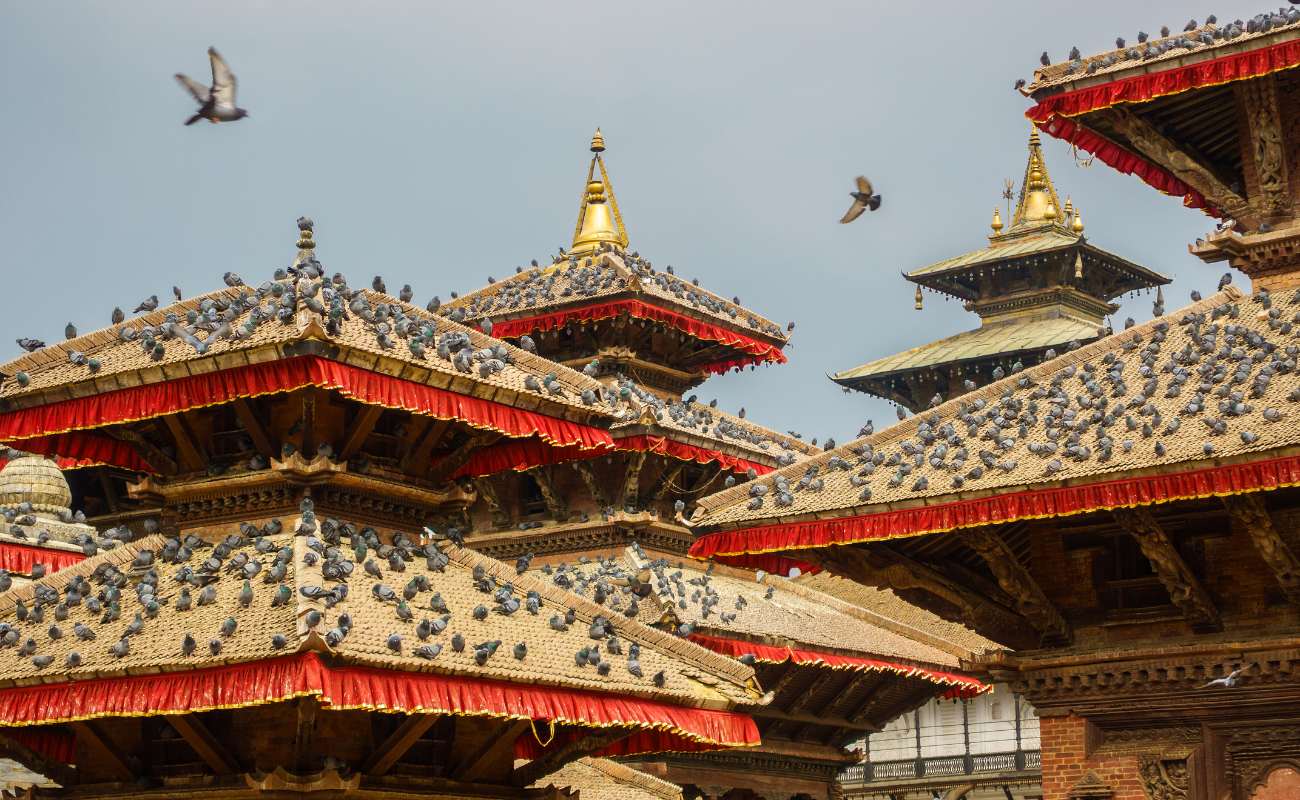
Kathmandu Durbar Square is the old royal square in the city centre, also called Basantapur Durbar or Hanuman Dhoka. The Nepal Tourism Board calls it the “Museum of Temples” and counts more than 50 temples nearby. It’s one of the seven monument zones of the Kathmandu Valley World Heritage property, inscribed in 1979.
A durbar square is the open area in front of a former royal palace in Nepal. The word “dhoka” means gate, and this palace takes its name from the Hanuman statue at its door.
The square has two parts, according to the board. The outer area holds Kasthamandap, the Kumari Ghar and the Shiva-Parvati Temple. The inner area holds Hanuman Dhoka and the main palace.
Where is it, and how far is it from Thamel?
The square sits in central Kathmandu, about 1.2 km in a straight line south of Thamel by our own map measurement. That’s close enough for most visitors to walk.

Who built Kathmandu Durbar Square?
Malla and then Shah kings built most of what you see, on a site with older roots. The dates below come from different sources, and not all of them agree.
| Period | What happened | Source |
|---|---|---|
| 4th to 8th centuries | Hanuman Dhoka dates to the Licchavi period | Nepal Tourism Board |
| Mid-16th century | The eastern wing, with ten courtyards, is the oldest surviving part | Wikipedia, Hanuman Dhoka |
| 1549, 1564 or 1576 | King Mahendra Malla builds the Taleju Temple. The Nepal Tourism Board says 1549, Wikipedia says 1564, and ICOMOS says work began in 1576 | Nepal Tourism Board, Wikipedia, ICOMOS |
| 17th century | King Pratap Malla expands the palace and adds temples | Nepal Tourism Board, Wikipedia |
| 1649 | Mohan Chowk is built as the Malla kings’ home courtyard | Wikipedia |
| 1672 and 1673 | The Hanuman statue (1672) and Narasimha statue (1673) go up | Wikipedia, Nepal Tourism Board |
| 1757 | Jaya Prakash Malla builds the Kumari Ghar | Nepal Traveller, Himalayan Times |
| 1768 | Prithvi Narayan Shah adds four lookout towers | Wikipedia |
| 1886 | The royal family moves to Narayanhiti Palace | Wikipedia |
| 1908 | Chandra Shumsher builds Gaddi Baithak | Onlinekhabar |
| 1975 | King Birendra is crowned in Nasal Chowk | Wikipedia |
Two dates conflict. A second Nepal Tourism Board page says the square was “constructed in 1770”, which can’t fit the earlier dates on its own main page. Nepal Traveller dates the Hanuman statue to the 16th century, while Wikipedia says 1672 and the board says it went up under Pratap Malla, who reigned in the 17th century.
What is there to see in the square?
The square has more named buildings than most visitors can take in on one visit. These are the ones with the clearest sources.
Inside Hanuman Dhoka palace
- Hanuman gate: A statue of Hanuman, the monkey god, guards the palace entrance. It gives the palace its name.
- Narasimha statue: A stone image of Vishnu’s man-lion form, put up by Pratap Malla in 1673.
- Nasal Chowk: The main courtyard just inside the gate. Coronations were held here until 2001, according to the Nepal Tourism Board.
- Panch Mukhi Hanuman Temple: A temple to the five-faced Hanuman, inside Nasal Chowk.
- Basantapur Tower: The nine-storey tower in the Nasal Chowk area, also called the Nautale Durbar.
- Shisha Baithak: An open patio showing the Malla throne and pictures of the Shah kings.
- Mul Chowk: The courtyard of Taleju Bhawani, family goddess of the Malla kings. It holds a golden torana (a carved panel above a doorway).
- Mohan Chowk: Built in 1649, with the golden Sun Dhara water spout. Nepal Traveller says it isn’t open to visitors.
The palace museums
- Tribhuvan Museum: Remembers King Tribhuvan (1906 to 1955) and his part in ending Rana rule. The board lists his bedroom, study, bicycle, jeep and photographic equipment, plus a large coin collection.
- Mahendra Museum: Covers King Mahendra (1955 to 1972), with his clothes, jewellery and ceremonial dress.
- Gargahana Museum: A gallery of gold and silver jewellery and statues found in a chest during excavation. It opened in December 2020, according to Onlinekhabar.
Temples and statues in the square
- Taleju Temple: The tallest structure in the square. The board says it opens to the public one day a year, during Dashain.
- Degu Taleju Temple: A triple-roofed temple built by Shiva Singh Malla.
- Jagannath Temple: Built in the 16th century, with erotic figures carved on its wooden struts (the angled roof supports).
- Kal Bhairav: One of the largest 17th-century stone statues in Kathmandu, showing the fierce form of Shiva.
- Swet Bhairav: A Bhairav image that the public can see once a year, during Indra Jatra.
- Kasthamandap: The wooden public shelter and temple, rebuilt after 2015. The Department of Archaeology says objects found after the collapse suggest it may date from the 7th century. Its name means roughly “wooden pavilion”, and The Himalayan Times calls it the source of the name Kathmandu.
- Trailokya Mohan Narayan Temple: Built in 1680, in the time of King Parthibendra Malla. It fell in 2015, and our Kathmandu earthquake restoration tracker gives its latest status.
- Maju Deval: Built by Queen Riddhi Laxmi in 1690 or 1692, as sources differ. Sources also differ on how she was related to the kings of the time. It was destroyed in 2015, so check how far the rebuilding has come.
- Shiva-Parvati Temple: Part of the outer square. Explore Nepal says only that it’s believed to date from the time of Bahadur Shah.
Other buildings
- Kumari Ghar: The home of the Kumari, the living goddess of Kathmandu. Read our Kumari Ghar guide before you go, because the rules matter.
- Gaddi Baithak: A building from 1908. Its front was destroyed in 2015, and it was restored by 2018.

What did the 2015 earthquake do to the square?
The earthquake of 25 April 2015 reduced several buildings to rubble, and rebuilding still isn’t finished. Kasthamandap collapsed that day. So did the front of Gaddi Baithak, and the nine-storey palace was destroyed.
Counts differ between reports, so we show them with their dates.
| Report date | Damaged in Hanuman Dhoka area | Rebuilt | Still to do |
|---|---|---|---|
| August 2021 (RSS) | 58 | 27 | 21 under way, 21 not started. The report’s figures don’t add up cleanly |
| January 2023 (Pardafas) | 75 | 38 | 14 under way, 23 not started |
| January 2025 (Rising Nepal) | 71 | “Many” | Agam Chhen still to start |
These named buildings have clear dates:
- Nine-storey palace: The foundation stone was laid in August 2017, with Chinese funding. It had been rebuilt by January 2023, along with the nearby Basantapur, Lalitpur, Kirtipur and Bhaktapur towers. The project was handed to Nepal in mid-August 2024, according to China Daily.
- Gaddi Baithak: Inaugurated on 27 June 2018 after restoration funded by US$700,000 from the United States. Some conservationists say the original design was changed. The Department of Archaeology says the old style was kept.
- Kasthamandap: Inaugurated by President Bidhya Devi Bhandari on 4 April 2022. Kathmandu Metropolitan City built it at its own expense. Architect Sudarshan Raj Tiwari called it a model for heritage conservation, The Rising Nepal reported in August 2026.
- Mohan Chowk and Sundari Chowk: Work had not started as of January 2023. We found no later report that it has.
- Agam Chhen (also Agan Chhen): Beside the entrance to Nasal Chowk. In January 2025 the Department of Archaeology said work would start soon, with Japanese help. We found no later report.
- Kumari Ghar: Roof repairs began on 9 March 2026.
Nationally, the Department of Archaeology says 825 of 920 damaged monuments had been rebuilt by August 2026. That figure covers all of Nepal, so it doesn’t tell you about this square. For the wider picture, see our Kathmandu earthquake restoration tracker.
How long do you need?
Allow about 2 hours if you want to see the square and the palace museums. This is our estimate. One published seven-site tour gives the square only 45 minutes, which leaves little time for the museums.

What is a good walking route?
This route starts at the south end and works north, finishing inside the palace.
- Enter from Basantapur at the south end, and stop at the Kumari Ghar.
- Look at Gaddi Baithak and the Basantapur Tower from outside.
- Walk to Kasthamandap.
- Continue past Maju Deval and the Shiva-Parvati Temple.
- Stop at the Hanuman gate and the Narasimha statue.
- Go through the gate into Nasal Chowk and the museums.
- Come back out and see the Jagannath Temple, Kal Bhairav and Swet Bhairav.
- End with the outside of the Taleju Temple.
For a longer route that starts from Thamel, see our Kathmandu self guided walking tour.
What is the best time of day to visit?
Morning is the simplest choice, because it leaves the most time for the museums. We found no official guidance, so treat this as a suggestion. A 2020 report gives museum hours of 8 am to 6 pm.
If you hope to see the Kumari at her window, Nepal Traveller and Best Heritage Tour give different hours. Details are on the Kumari Ghar page.

What are the rules for dress and photography?
Dress modestly, with shoulders and knees covered. Best Heritage Tour gives this advice for the Kumari Ghar courtyard, and it’s a sensible rule across the square. For more detail, see what to wear in Kathmandu.
- Never photograph the Kumari. Travel guides give this rule, and we ask the same of you.
- Don’t photograph worshippers or priests without asking.
- Ask before you take photos inside the museums. We couldn’t find a published rule.
- Take off your shoes before entering any shrine.
Are there steps, and is it accessible?
One report says the square offers access for wheelchair users. That comes from an Onlinekhabar article of November 2025 by a tour operator, and it gives no detail on surfaces or ramps.
Kumari Ghar has three steps up to its door. We have no measurements for the temples, the palace or its upper floors, so ask before you book if you use a wheelchair. Our steps and mobility guide compares all the sites.

Which festivals happen here?
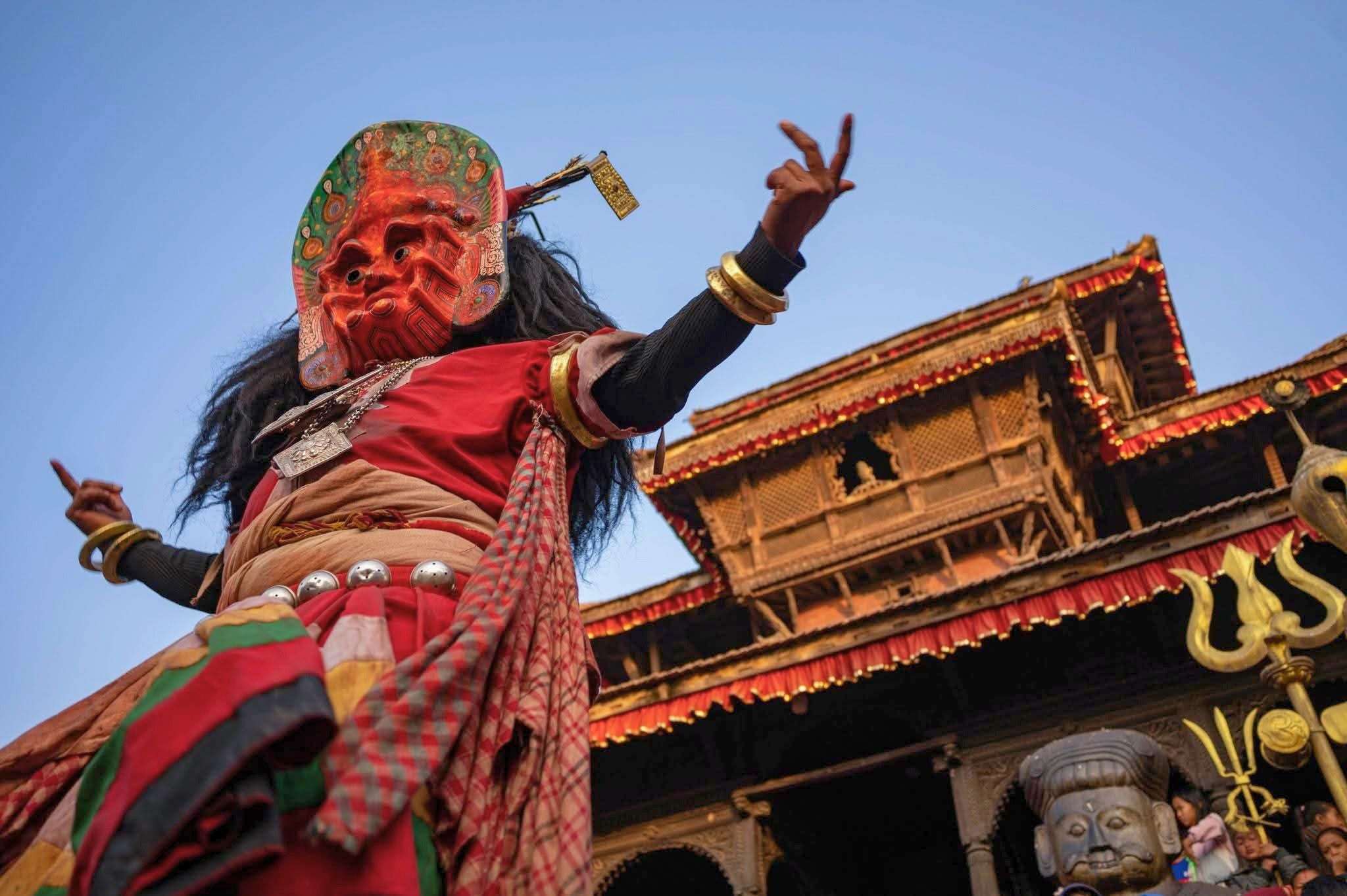
Indra Jatra is the main festival of the square. It lasts eight days in the Nepali month of Yanla, usually in August or September. It opens when the Yosin pole goes up in the square, and chariots carry representations of Ganesh, Bhairava and Kumari through Kathmandu. See our Indra Jatra guide for the date.
Swet Bhairav goes on public view during Indra Jatra. The Taleju Temple opens for one day during Dashain.
How do you get there?
Most visitors walk from Thamel. A taxi is the easy alternative, and our Kathmandu taxi fare guide covers prices.

What is near the square?
Several other sites are a short ride away, and an old traveller street is close by.
- Jonchhe: A street near the square that was a hippie hangout in the 1960s and 1970s, according to the Nepal Tourism Board.
- Asan market: A traditional market in the old city, and a stop on our Kathmandu food tour.
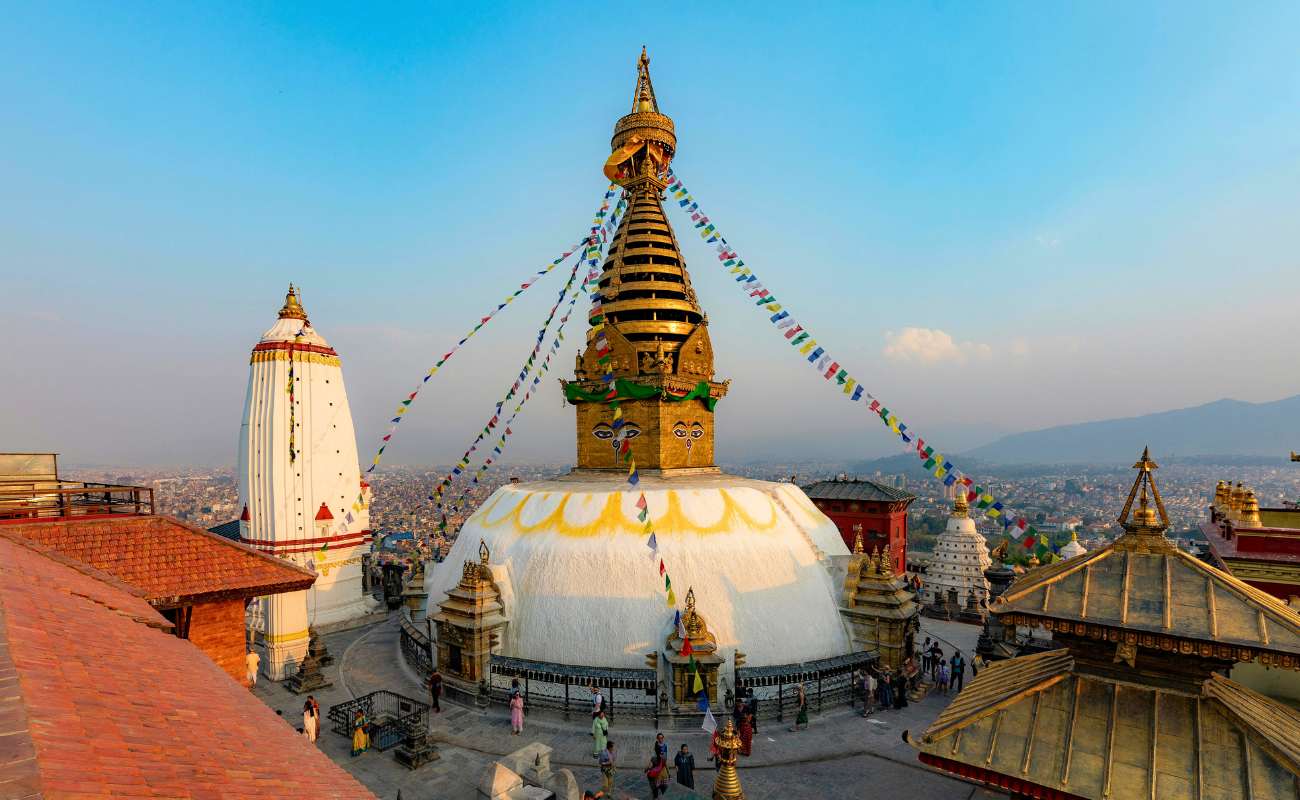
- Swayambhunath: About 2 km in a straight line to the west. See the Swayambhunath guide.
- Patan Durbar Square: About 4 km in a straight line to the south-east.
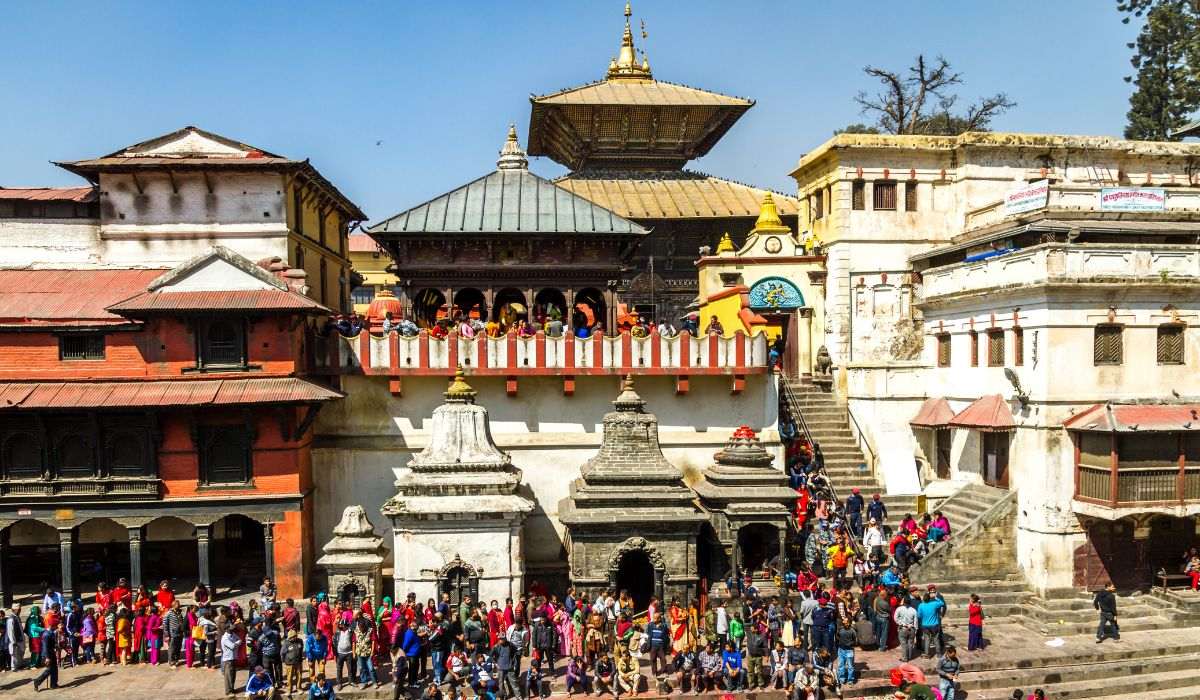
- Pashupatinath: About 4 km in a straight line to the east.
How do you visit with a guide or alone?
You can visit alone with no booking. Buy a ticket at the counter, and pay in Nepali rupees. Read the list above first, so you know what you’re looking at.
A guide helps here more than at most sites, because the square has so many buildings with similar names and dates. A guide can also tell you what’s open that day. Read do you need a tour guide in Nepal if you’re undecided.
The tours listed on this page stop at the square. On a private tour you can change the pace, so tell us if you want more time in the museums.