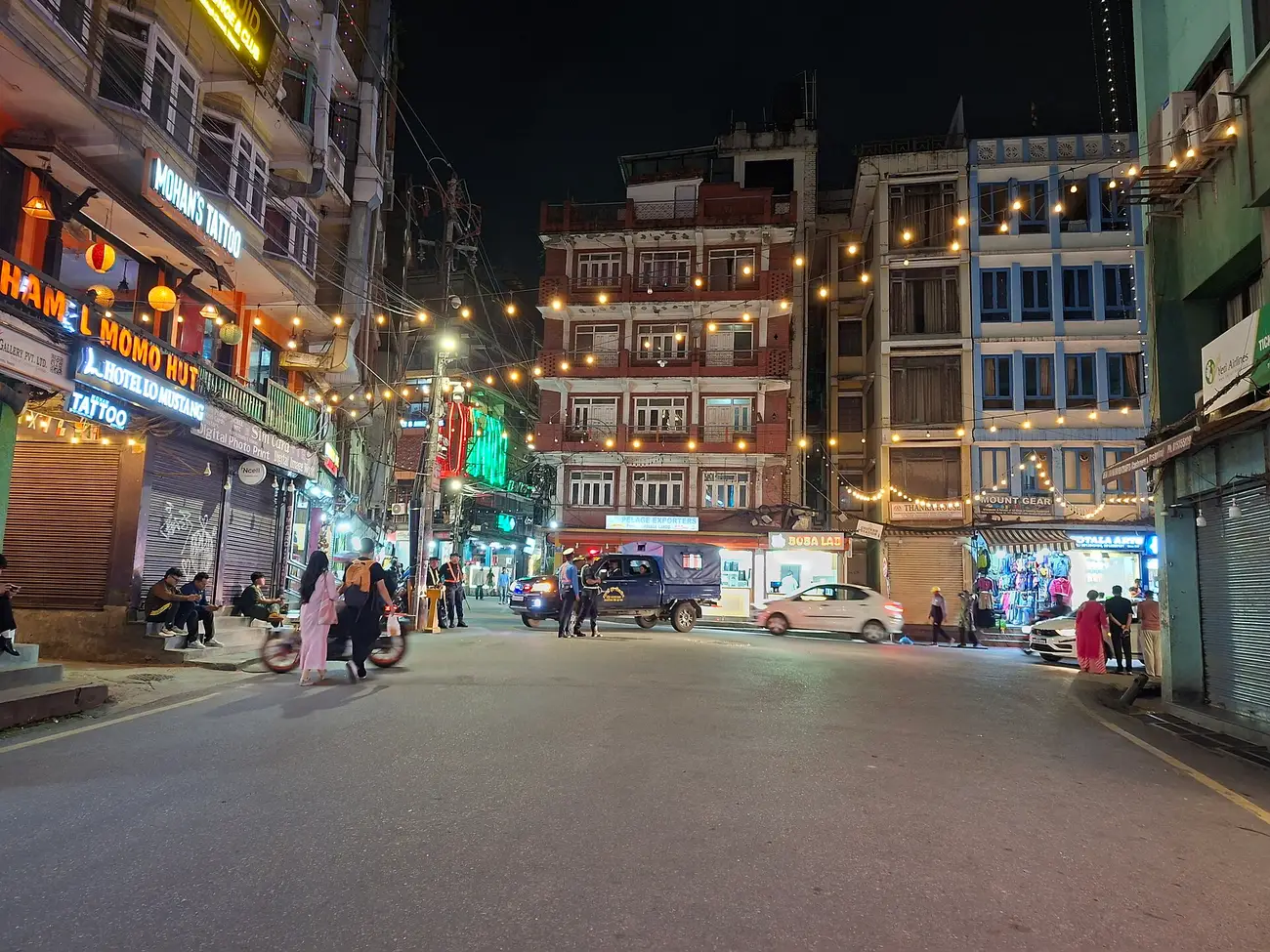
This Kathmandu food tour is a 3 to 4-hour walk through Thamel and the old market of Asan, tasting local snacks with a guide. There’s no vehicle and no hotel pick-up on either the group or the private walk, so you meet your guide on foot.
What food can you try in Kathmandu’s old market lanes?
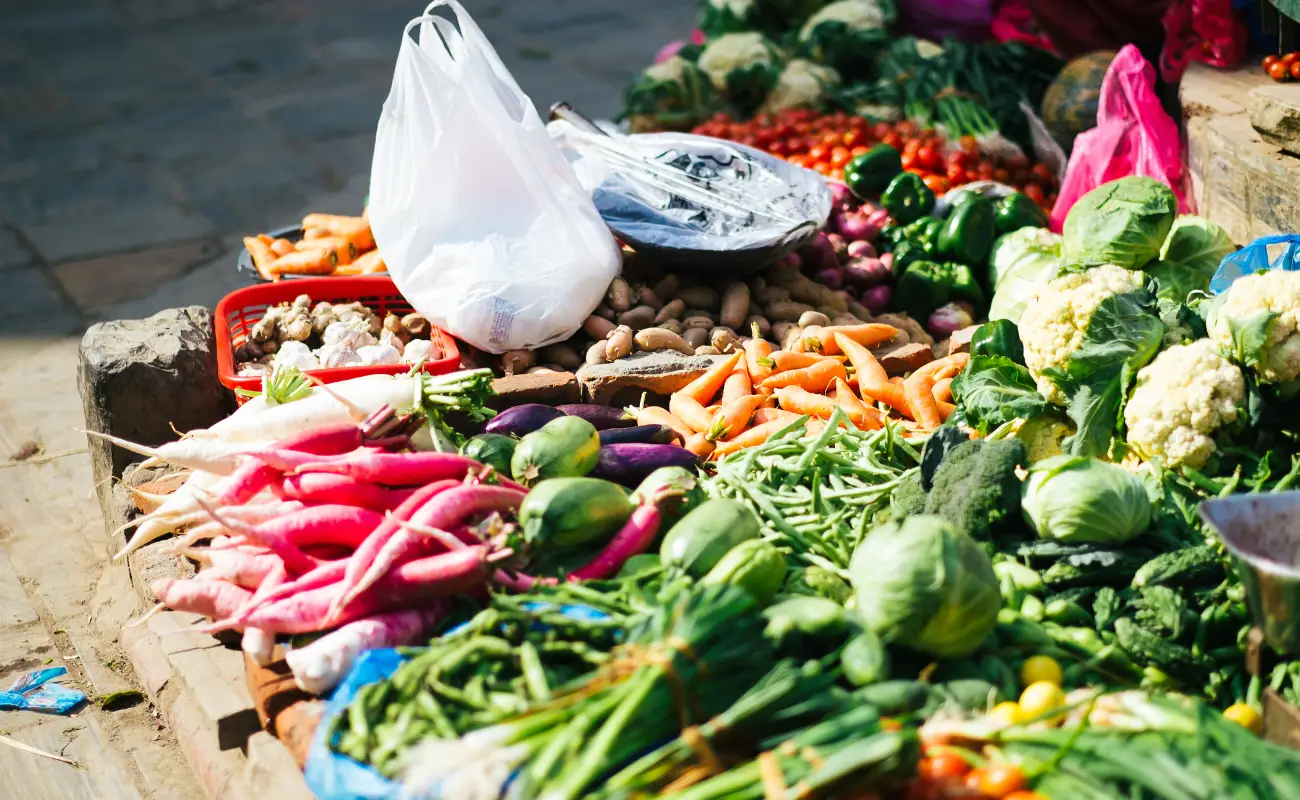
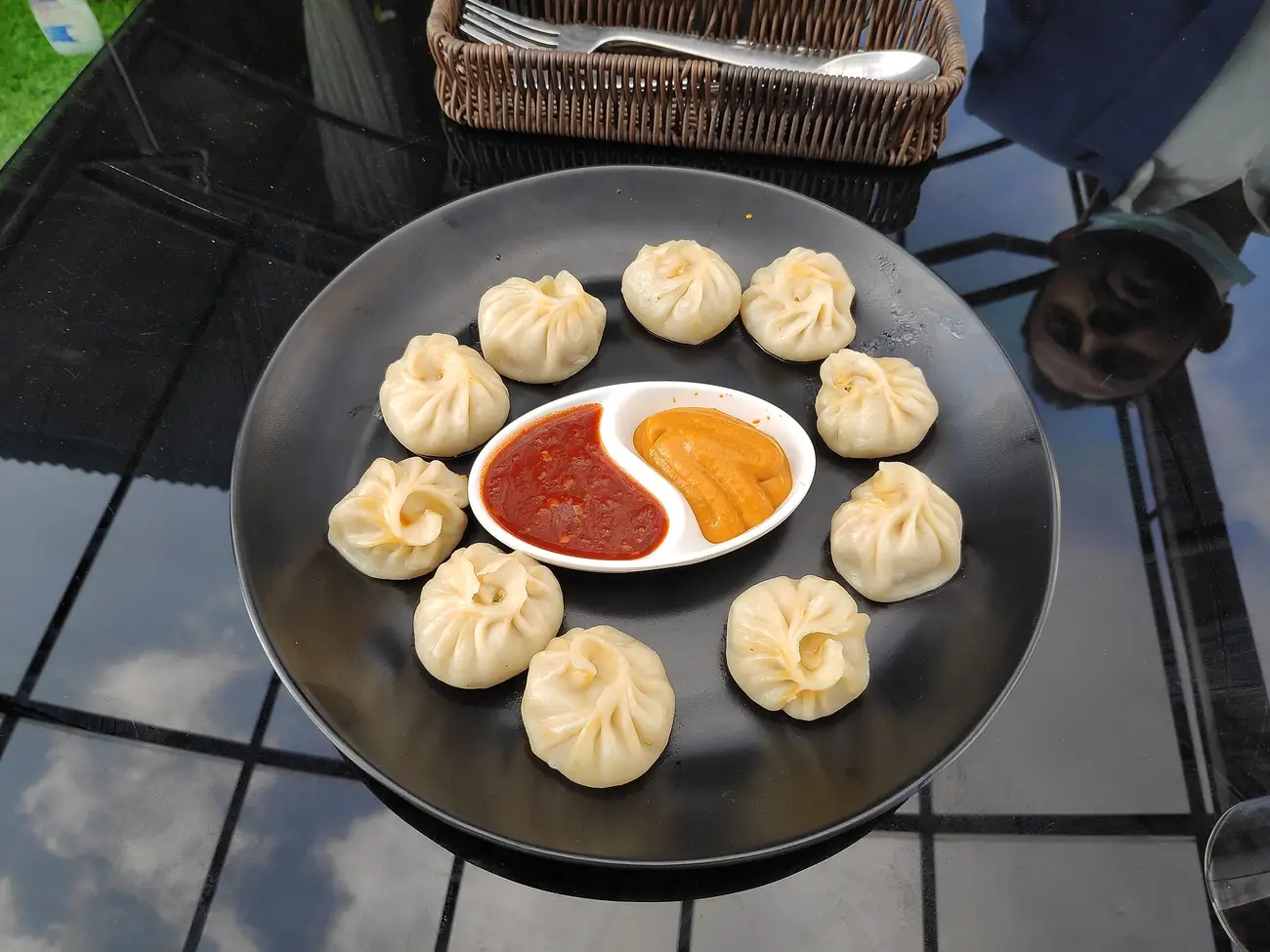
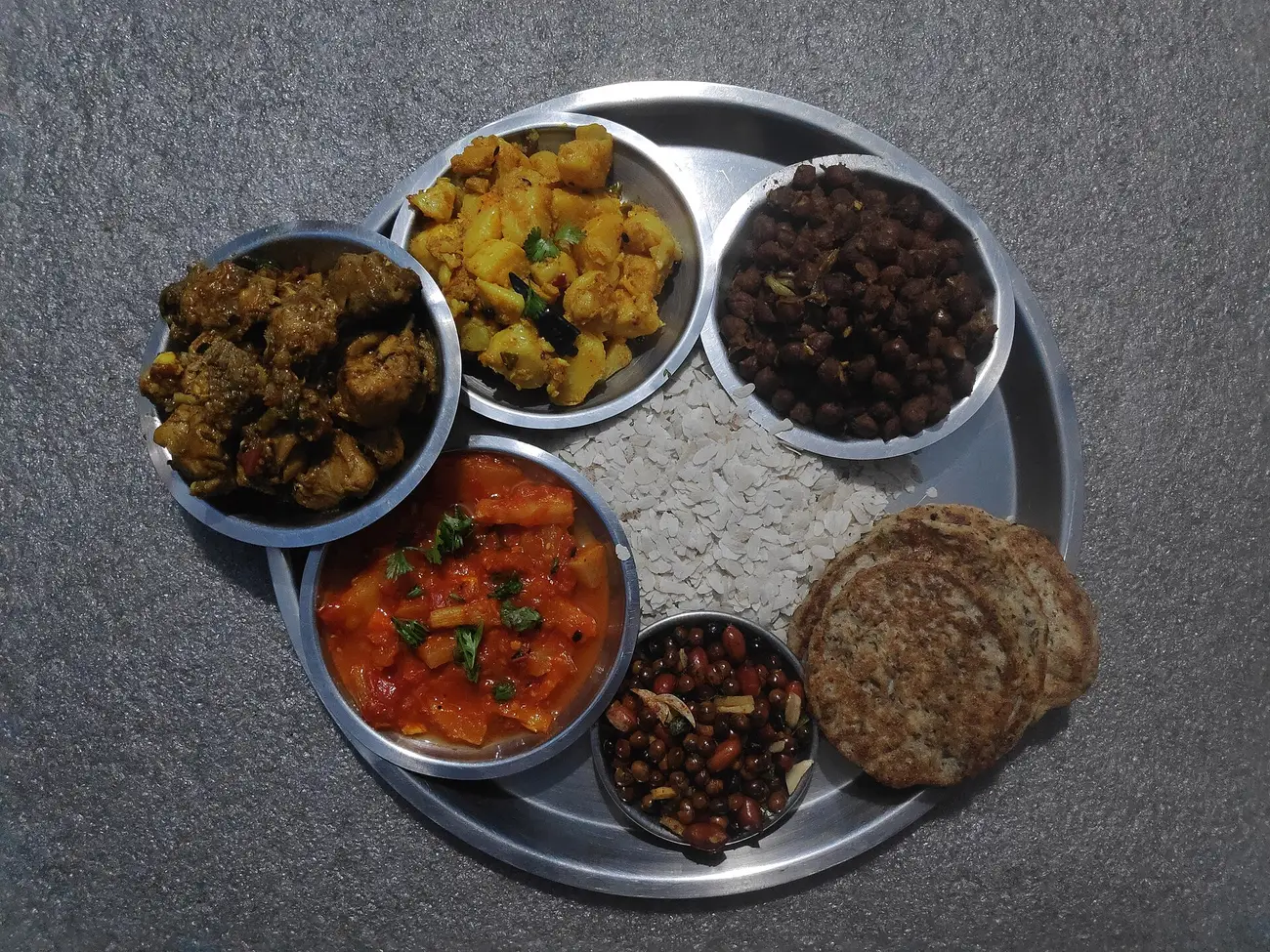
You can try fried and steamed snacks, Newar dishes and sweet things, though what’s on offer changes with the season and the stalls. Nepal Traveller, writing in April 2026, lists samosas, jalebi (syrupy fried sweets), pani puri and seasonal fruit at Asan, and momo, chowmein and sekuwa (grilled meat) in Thamel.
For the wider picture, read our guide to local food in Kathmandu. Here are the terms you’re likely to meet:
- Momo: a dumpling with a meat or vegetable filling, served with a spicy sauce.
- Bara: a deep-fried, doughnut-shaped cake of spiced lentil paste, also called wo in its flat form.
- Chatamari: a thin rice-flour crepe, plain or topped with egg or minced meat.
- Choila: Newar spiced meat, boiled or grilled.
- Yomari: a steamed rice-flour dumpling filled with molasses or dried milk solids. The Kathmandu Post ties it to a December harvest festival, so don’t expect it all year.
- Sel roti: a sweet, ring-shaped fried rice bread, traditionally made for festivals.
How does this Kathmandu food tour work without a vehicle?
It works because both areas are walkable, and you stay on foot from start to finish. The group walk starts at its fixed time in Thamel, and on a private walk you choose the start time. You’ll get your exact meeting point when we reply to your request.
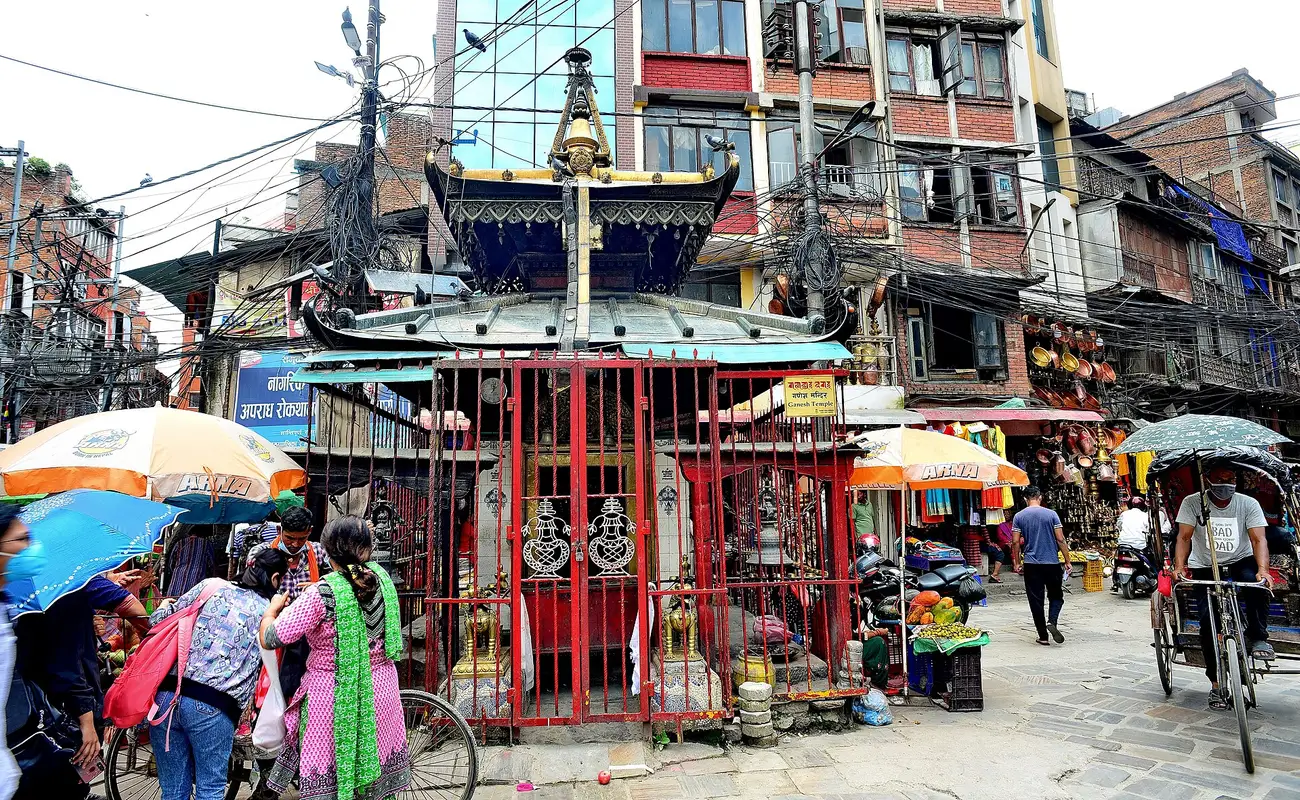
Thamel comes first and the older lanes follow, so you move from the more commercial streets to the older market. Nepal Traveller calls Thamel “slightly more commercial” and says its streets come alive after dark. That’s why the sample plan starts at about 4 pm and ends around 7:30 pm, with a last stop back near Thamel.
What will you see in Asan?
You’ll see one of the valley’s oldest marketplaces, on an old trade route. Asan is a market square in central Kathmandu, and Wikipedia describes it as lying on one of two legendary trade routes between India and Tibet, running north-east from Kathmandu Durbar Square.
The Annapurna temple presides over the square. It honours the goddess of abundant food grain, which is a fitting detail on a food walk. Please don’t crowd worshippers there, and ask before photographing people at work.
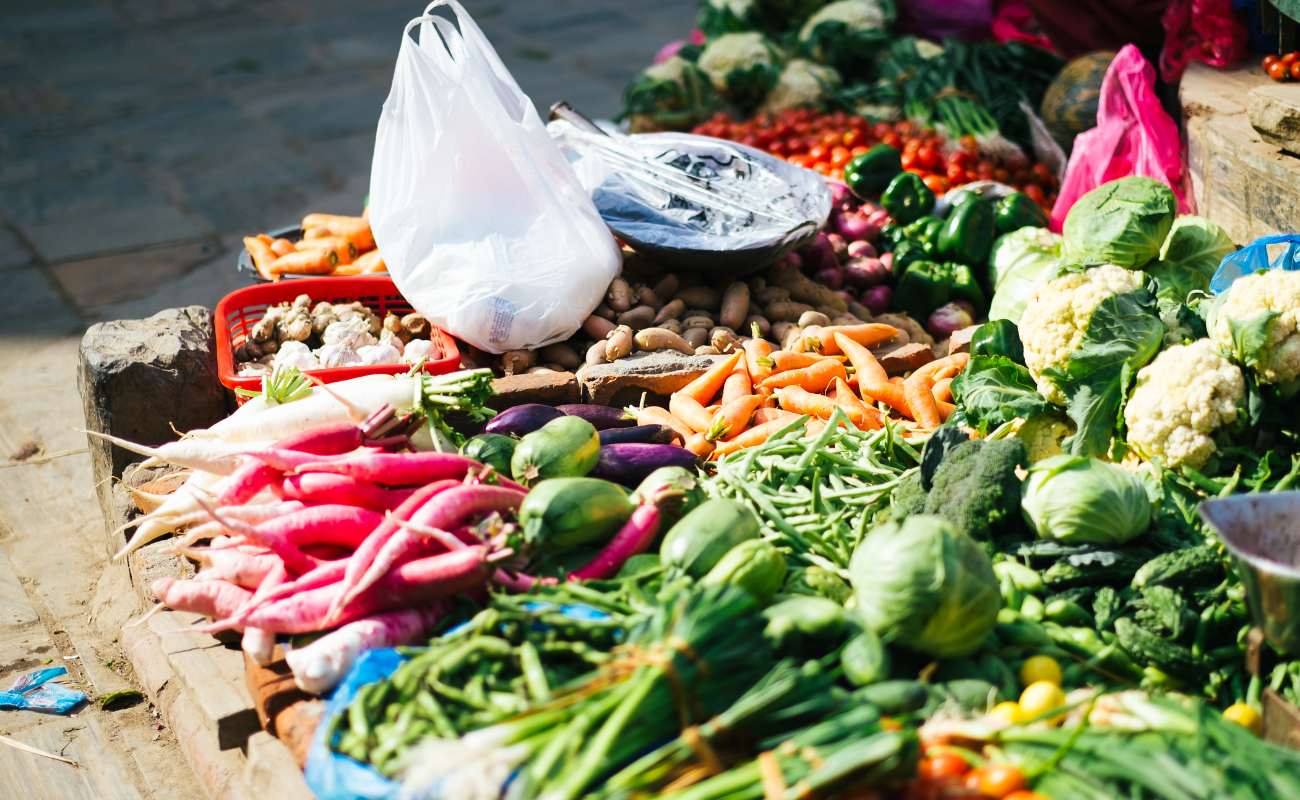
Besides food, stalls sell seasonings, fabrics and electronics. Expect crowded lanes.
How does this compare with our other evening or short options?
The closest alternative is the Pashupatinath and Boudhanath tour, which also works late in the day but is about faith and not food.
| Tour | Time | On foot or by car | Good for |
|---|---|---|---|
| This tour | 3 to 4 hours | On foot only | Food, markets, a first evening |
| Pashupatinath and Boudhanath at dusk | 4 to 5 hours | By car, with hotel pick-up if private or added to a group | Evening ritual and stupa views |
| Kathmandu half day tour | 4 hours | By car, with hotel pick-up if private or added to a group | Heritage sites in daylight |
The food walk is the only one here with no entry fee on the route. If you want to explore the old city at your own pace, there’s also a self-guided walking tour.
Where does a meal fall?
The tastings replace a meal, so you probably won’t want dinner straight after. Come hungry, but pace yourself. A tasting walk in the same part of the city by A Chef’s Tour runs to 15 or more tastes in 3.5 to 4 hours, and that’s plenty.
If you’re vegetarian, tell us when you ask. That operator warns that vegan, gluten-free, strict halal and severe allergy diets are hard to serve, and that cross-contamination can’t be ruled out.
Is it safe to eat street food here?
It’s reasonably manageable if you choose well, but no one can promise you won’t get ill. Water is a main concern, and the US CDC says safe food and water habits help prevent both cholera and typhoid.
Nepal Traveller gives practical rules in July 2026:
- Choose busy stalls where locals are eating, because turnover keeps food fresh.
- Pick food that’s hot and cooked in front of you.
- Avoid ice, pre-cut fruit and raw salad.
- Be careful with uncovered chutneys and unpasteurised dairy.
- Drink only boiled, filtered or sealed bottled water.
- Clean your hands before you eat.
Fresh curd and other unpasteurised dairy carry more risk than a hot dumpling. If your stomach is still adjusting to Nepal, wait a day or two before you join a walk like this.
What can go wrong, and how does the evening change?
Rain and closed stalls are the likeliest problems, and the route can shift around them. Street stalls offer little cover, so a downpour will send you indoors.
- Rain: the UK Foreign Office says monsoon normally runs from June to October. Lanes can get slippery.
- Vendor clearances: Kathmandu has moved street vendors on before. In June 2022, the city barred the sale of water-based street food during a cholera scare. We couldn’t confirm the status of any such rules today, so stalls may differ from what you read here.
- Festivals: festival days can fill these lanes and close roads. They may also change what’s on sale.
- Strikes: one guide says shops and restaurants may close during major strikes. We’d talk to you about moving the date.
Tell your guide early if something doesn’t agree with you. You can stop at any time, and your guide can point you back to Thamel.