How accessible are Kathmandu’s main sites?
Kathmandu’s main sites are old places with steps, uneven ground and little formal access, and reports on them conflict. We found no official access statement for any of the seven, and no measured data. Most claims come from operators selling wheelchair tours or from general travel guides.
| Site | Steps and climb | Surface and setting | Confidence |
|---|---|---|---|
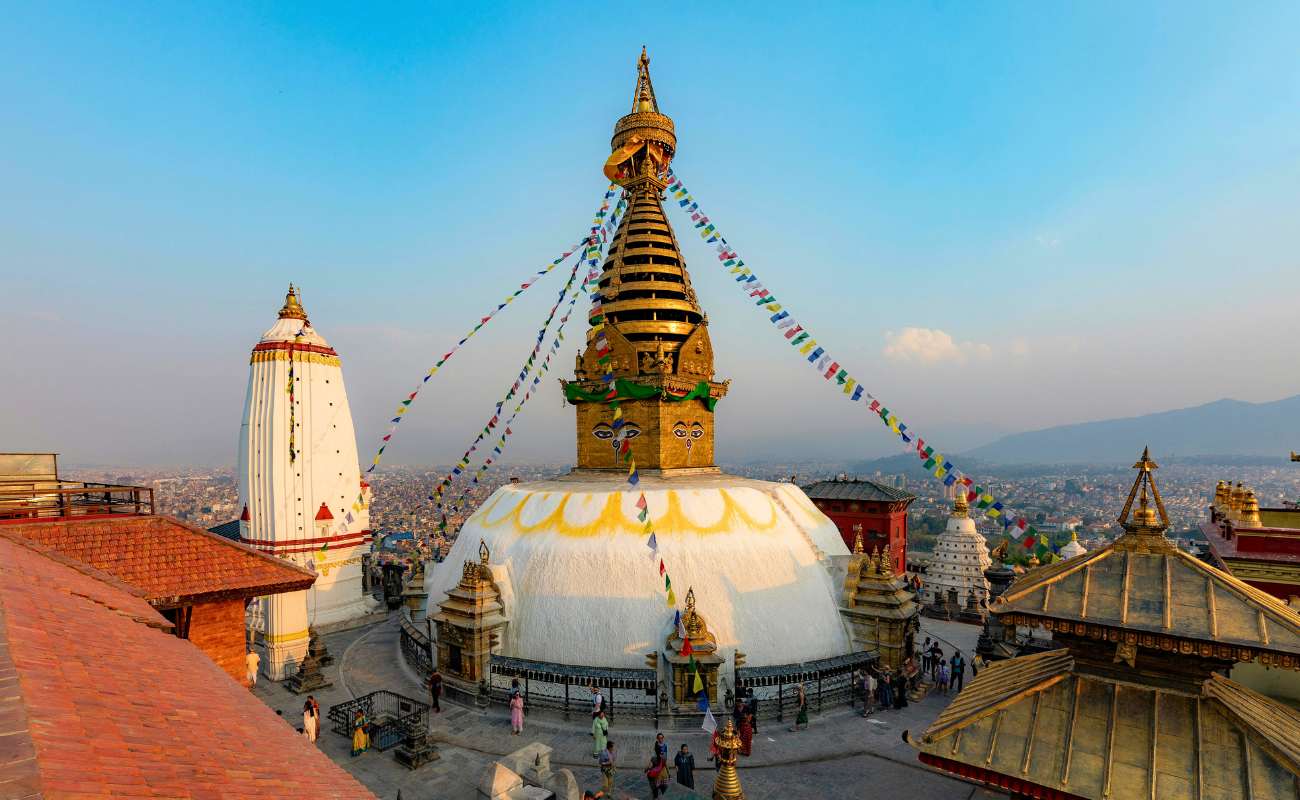
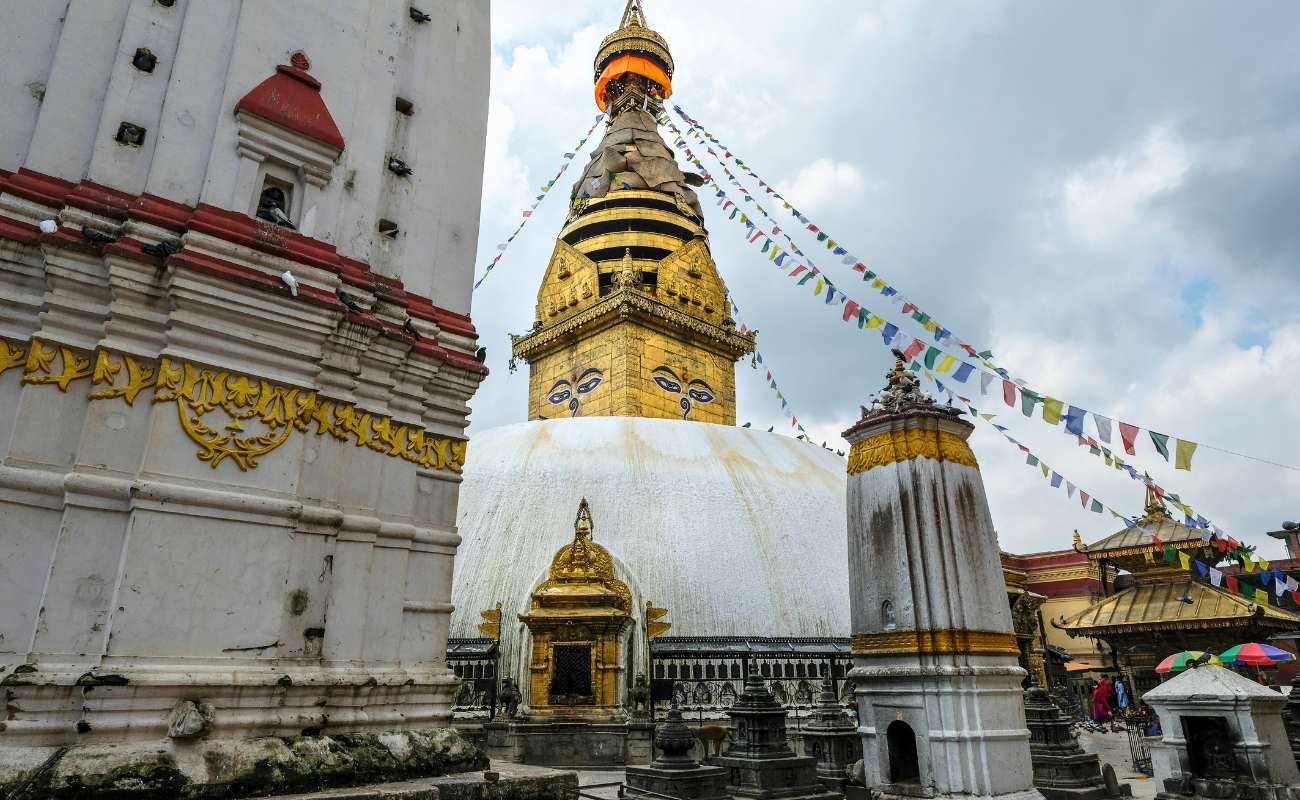
| Swayambhunath | East stairway commonly given as 365 steps, though published counts run from 318 to 424. West side has a road and a short flight | Stone stairway, slippery when wet | Medium |
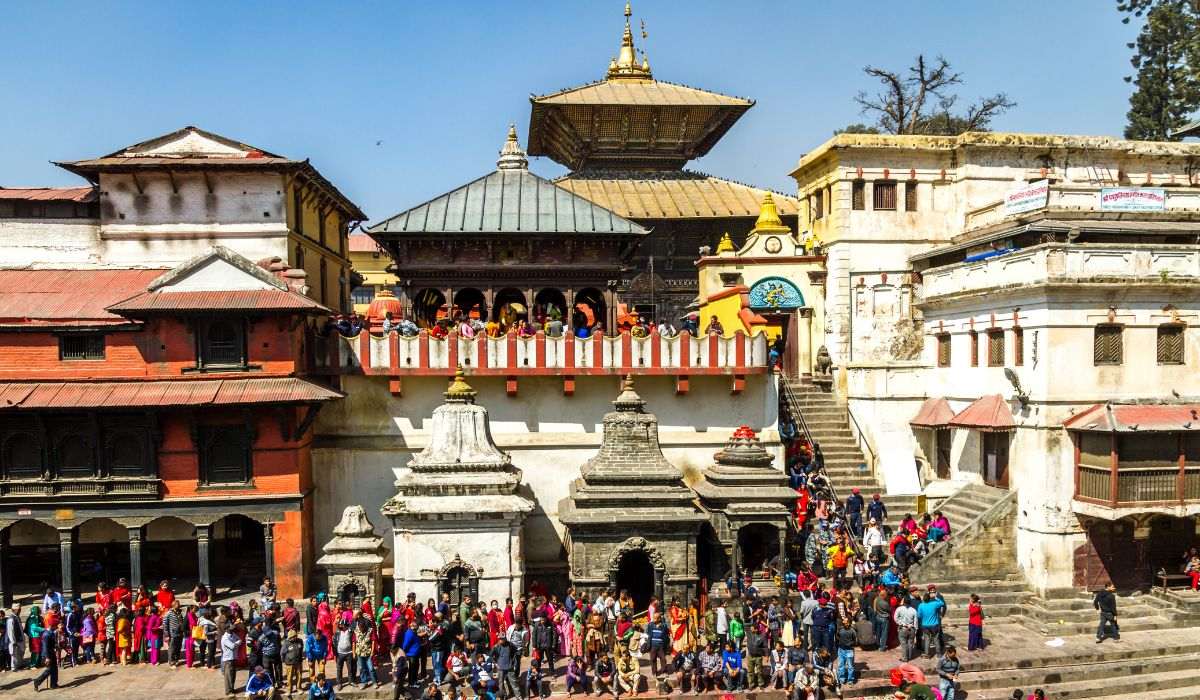
| Pashupatinath | Riverside ghats (stone steps). No count found | Terraces across the river | Low |
| Boudhanath | Circuit described by operators as wheelchair accessible. Separate climb to the dome, no count found | Circuit around the stupa | Low |
| Kathmandu Durbar Square | No step information found | Open square, with reconstruction fencing in places | Low |
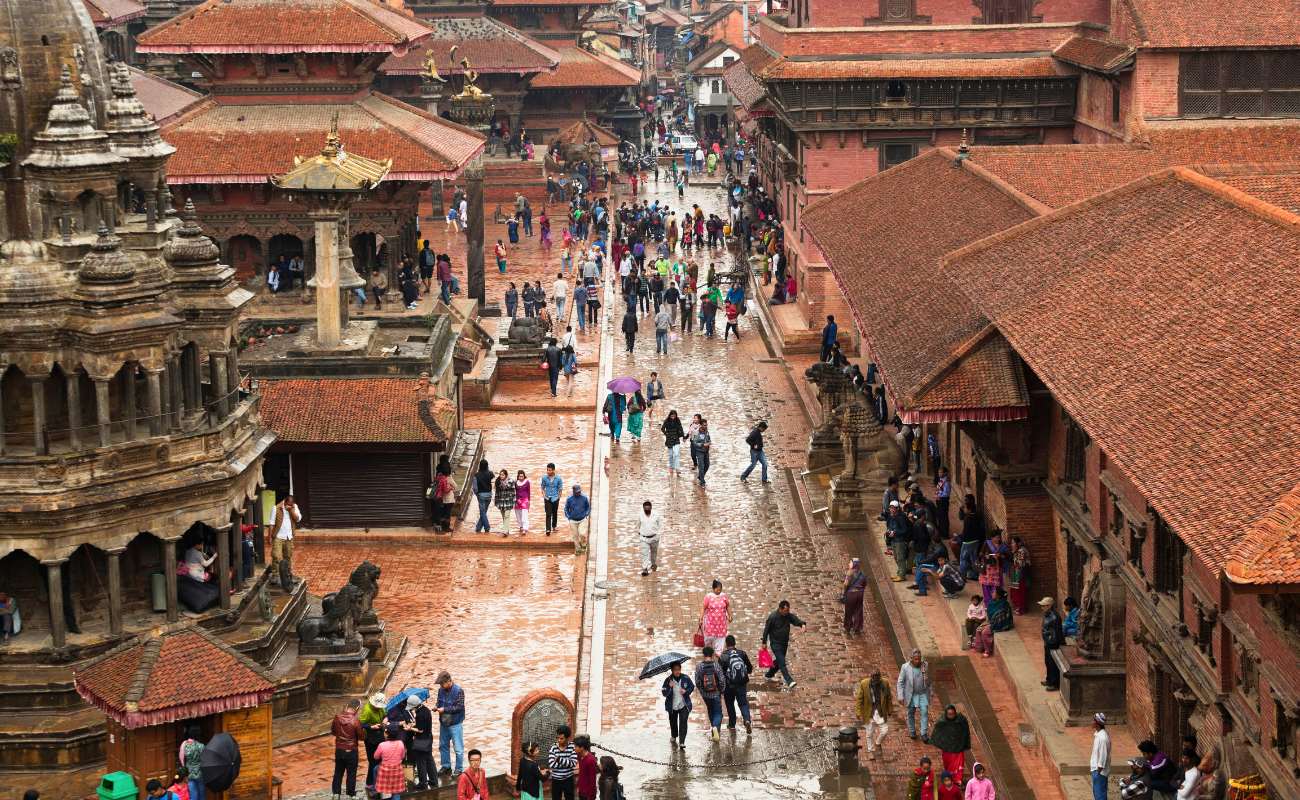
| Patan Durbar Square | Platform steps at some temples | Scaffolding in places, October 2026 | Low |
| Bhaktapur Durbar Square | Temple stairways. Sources conflict on access | Brick-paved, traffic-free core | Medium |
| Changu Narayan | About 10 minutes up a flight of steps from parking | Hilltop temple | Medium |
“Confidence” here is our own view of the evidence. No site has been measured for this page.
How many steps does Swayambhunath have?
Swayambhunath’s eastern stairway is commonly given as 365 steps, though published counts run from 318 to 424. ECS Nepal says 365 has no solid basis. The Longest Way Home and Access Nepal Tour both use 365, and Access Nepal Tour adds that some guides say 300 and the climb takes 10 to 15 minutes. The Longest Way Home warns that the steps can be tiring, and slippery in rain.
You can avoid most of them. Access Nepal Tour says a taxi can reach the western car park, where “a gentler road and a short flight of steps” lead to the stupa platform. Tickets are sold there too. So the top is possible without the long climb, but it isn’t step-free on that description.
Wheelchair reports differ here. DisabledTours, in March 2024, claims wheelchair accessible pathways, with no detail. No other source we read supports that, so don’t rely on it. Watch your bags too, since monkeys here take food and shiny objects. See the Swayambhunath guide for the rest of the visit.
How many steps does Pashupatinath have?
We couldn’t find a reliable count of steps at Pashupatinath. In Your Pocket says riverside ghats (stone steps) link the shrines and cremation areas, and Tour Guide mentions steps on the eastern bank where visitors watch aarti (the evening lamp ceremony). The Longest Way Home describes temple terraces across the river.
DisabledTours and Accessible Nepal say some areas or paths are wheelchair-friendly, without naming them. No source explains how to reach them. Expect to be limited to parts of the grounds, and ask on the day.
The main temple is for Hindus only, whatever your mobility. Non-Hindu visitors use the grounds, ghats and surrounding shrines. More is in the Pashupatinath guide.
What about Boudhanath?
Boudhanath’s main walk is a clockwise circuit around the stupa, and operators describe it as accessible. DisabledTours says wheelchair accessible paths encircle it, and Accessible Nepal says selected paths are wheelchair-friendly. Neither describes the surface. The Longest Way Home mentions a climb to the dome for the view, without a step count.
What about the Durbar Squares?
Durbar Squares are the sites where sources disagree most. These are open public squares, with stepped temple platforms and repair work in places.
Kathmandu Durbar Square. Nepal Kameleon Holidays, in October 2026, calls it “fully wheelchair-accessible”, and DisabledTours mentions accessible routes to Hanuman Dhoka and Taleju. Neither gives detail. In Your Pocket warns of possible scaffolding and temporary fencing. The Longest Way Home says there are no public toilets inside, and notes that unofficial guides approach visitors at the entrances. Treat “fully accessible” with caution.
Patan Durbar Square. Accessible Nepal says selected paths are wheelchair-friendly. The Longest Way Home reports scaffolding on parts of two buildings in October 2026 and platform steps at Chyasin Dewal. We found nothing on stairs or lifts in the Patan Museum, so ask at the ticket office at the southern end.
Bhaktapur Durbar Square. In Your Pocket describes brick-paved streets and a largely car-free core. The Longest Way Home says the square is traffic-free and walkable. A listing on The Abroad Guide, though, says a walking tour there is “not suitable for people with mobility impairments” because of uneven streets and temple stairs. Nepal Kameleon says the opposite. Nyatapola, the five-tiered temple nearby, has a stairway lined with guardian statues. We found no count.
What about Changu Narayan?
Changu Narayan needs about a 10-minute walk up a flight of steps from the parking area, according to The Longest Way Home, updated October 2026. The page gives no step count. Nepal Kameleon says it is “pretty tough, but the temple is accessible by wheelchair”. We’d take that as a claim to test, and only with helpers.
Can wheelchair users visit Kathmandu?
Wheelchair users can visit parts of the valley, but should expect help and some sites they can’t fully reach. Nepal Kameleon itself says a couple of destinations can’t be reached by wheelchair, without naming them. It provides one assistant per wheelchair user, and its tours run for at least three days.
Streets are a separate problem. The Longest Way Home describes old city lanes as narrow, with motorbikes and rickshaws appearing at any point. We found no first-hand report from a wheelchair user that we could verify. A recent account from one would be the best source you could get.
Health matters too, especially for older visitors. The US CDC says air pollution in the valley is frequent and can cause flare-ups for people with heart or lung conditions.
What should you ask before booking?
Ask for specifics about steps, distances and vehicles, then ask for photographs. Vague words like “accessible” don’t tell you much in Kathmandu. These questions suit any operator or hotel, and suit us too.
- How many steps are there at each stop, and is there a handrail?
- How far is the walk from the vehicle to the main sight, and how far can the vehicle get?
- What’s the ground like: brick, stone, gravel or broken paving?
- Are there places to sit, and how often?
- Where is the nearest toilet you can use, and is it step-free?
- Is the vehicle high? Is there a ramp or lift, and where does a wheelchair go?
- Who helps, and have they been trained or done this before?
- Can you share a recent photo or short video of this route?
- Can the day be shortened or changed if it’s too much?
On private tours, you can change the pace, and on most tours swap a stop, so tell us your limits when you ask about a date. Group tours have a fixed route and schedule, so private is usually the better fit if you have walking limits. If you’re travelling with older relatives, the page for seniors covers more of the planning. Entry costs are on the Kathmandu entry fees page.