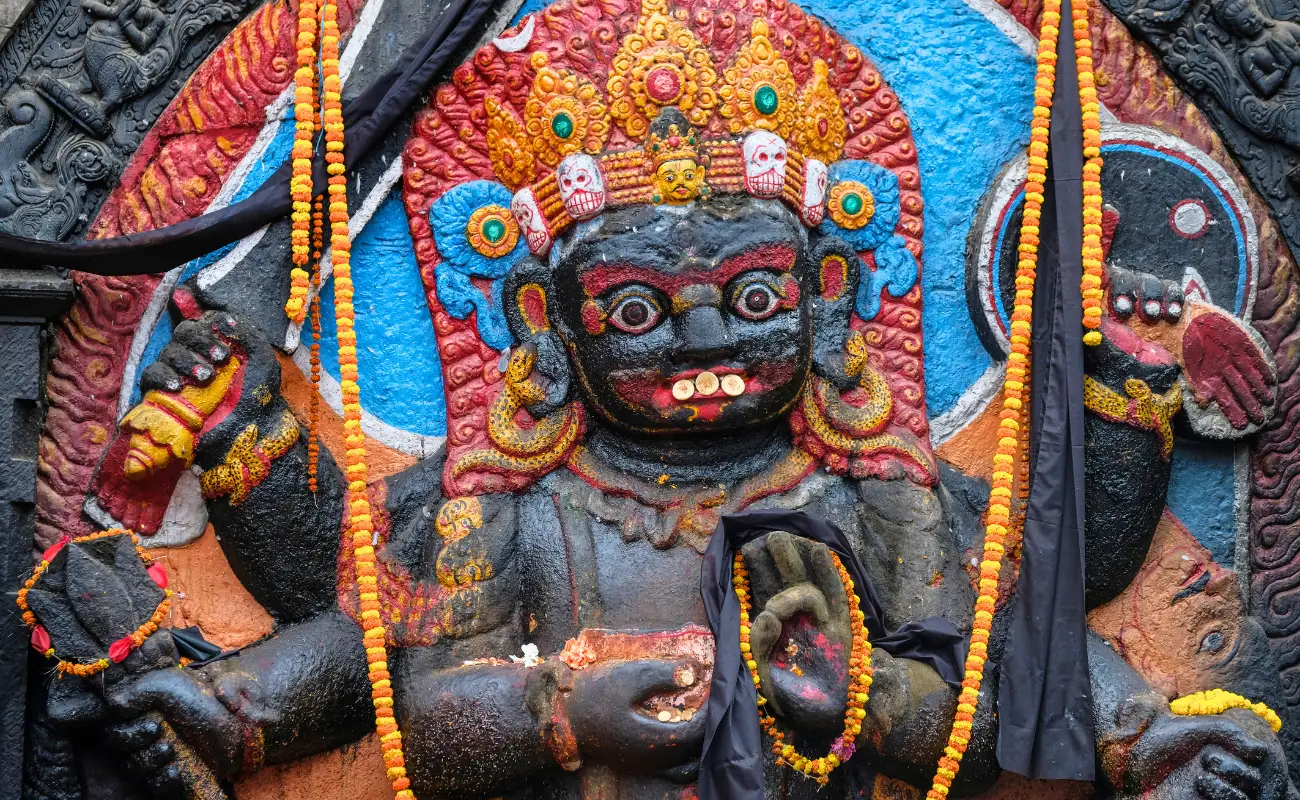
This Kathmandu sightseeing tour is a 6 to 7-hour city tour of four UNESCO monument zones: Swayambhunath, Kathmandu Durbar Square, Pashupatinath and Boudhanath. As a one day tour in Kathmandu, it trades some depth for range, and you see one site of each main kind.
How much of the valley’s heritage fits in one sightseeing day?
Four of the seven UNESCO zones fit comfortably in one day, with about an hour at each. That’s the number where the day stops feeling like a list.
If you’re deciding between shorter and longer options, compare this with our guide to one day in Kathmandu. The three sites left out are Patan, Bhaktapur and Changu Narayan.
Why do the stops run in this order?
The route moves from west to east, which limits backtracking across the city. Swayambhunath is on the western edge, the royal square is in the centre, and Pashupatinath and Boudhanath are on the eastern side.
The last two are close together. Rome2Rio gives about 2.8 km by road between them. Finishing there saves a long hop across the city late in the day, and on a private tour it’s an easy finish if your hotel is near Boudhanath.
What will you see at each stop?
You’ll see two Buddhist stupas, one royal palace square and one Hindu temple complex.
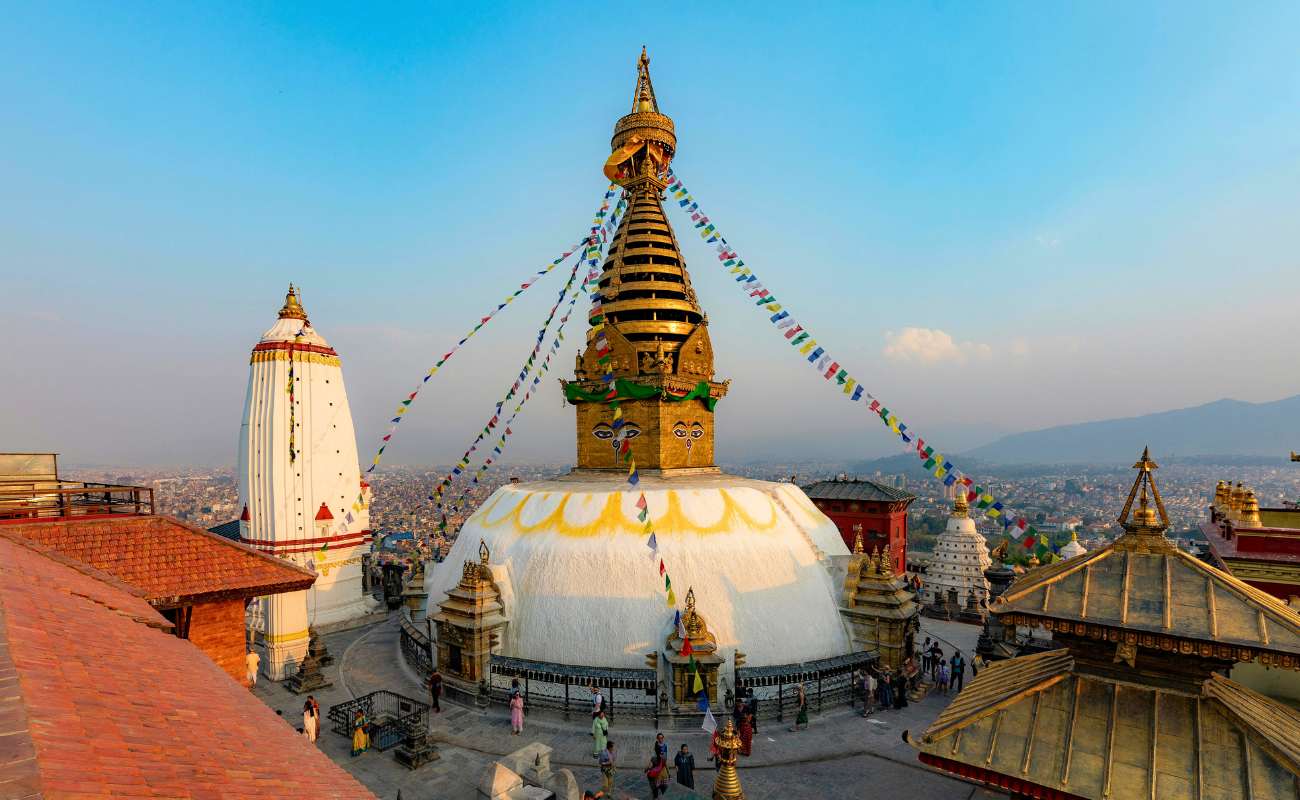
Swayambhunath
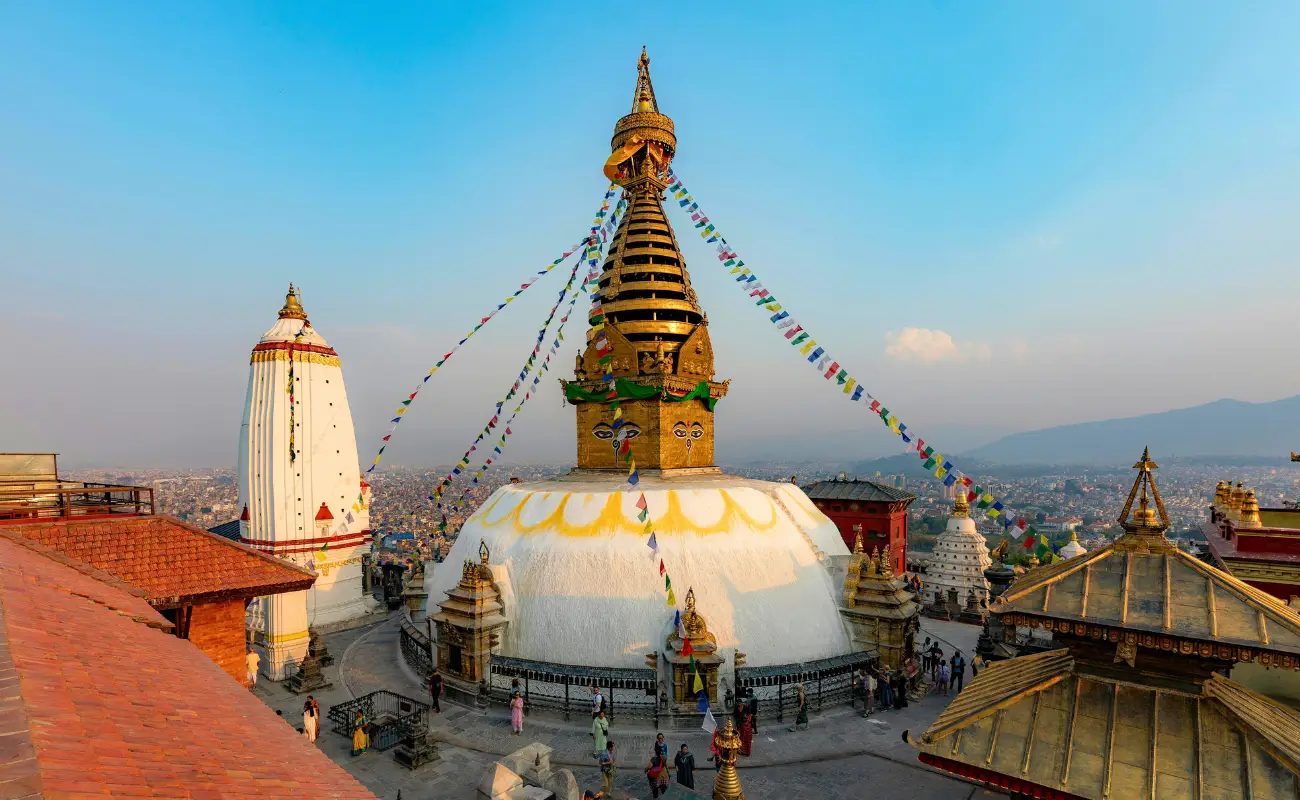
Swayambhunath is a hilltop stupa whose painted eyes look out in four directions. The early start gives you the valley view before the day warms up. A road reaches the top, so the long stairway is optional, and monkeys are everywhere, so keep food in your bag.
The old royal square
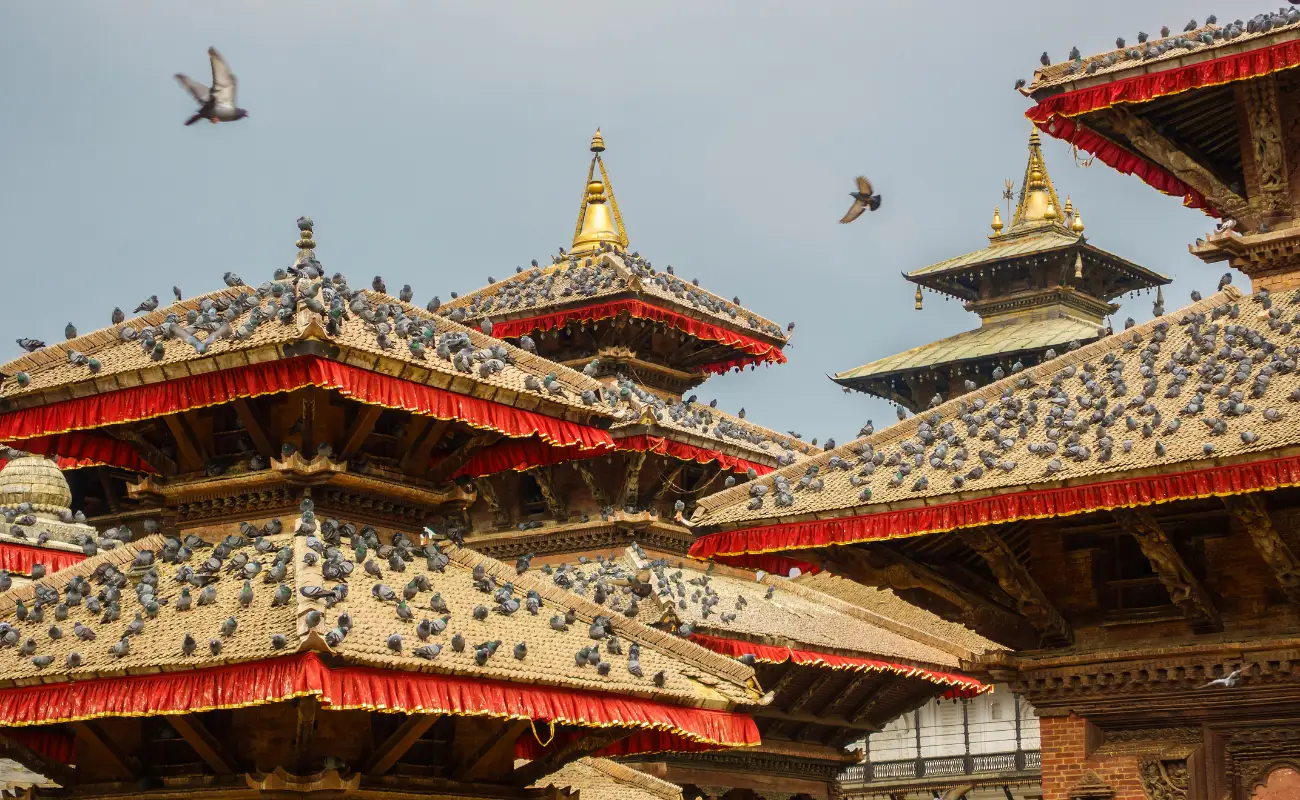
Hanuman Dhoka, the former royal palace, gets its name from the stone Hanuman in red cloth at its gate. Expect some repair work: the palace buildings were severely damaged in 2015, and nationally the Department of Archaeology counted 825 of 920 damaged sites as reconstructed by August 2026.
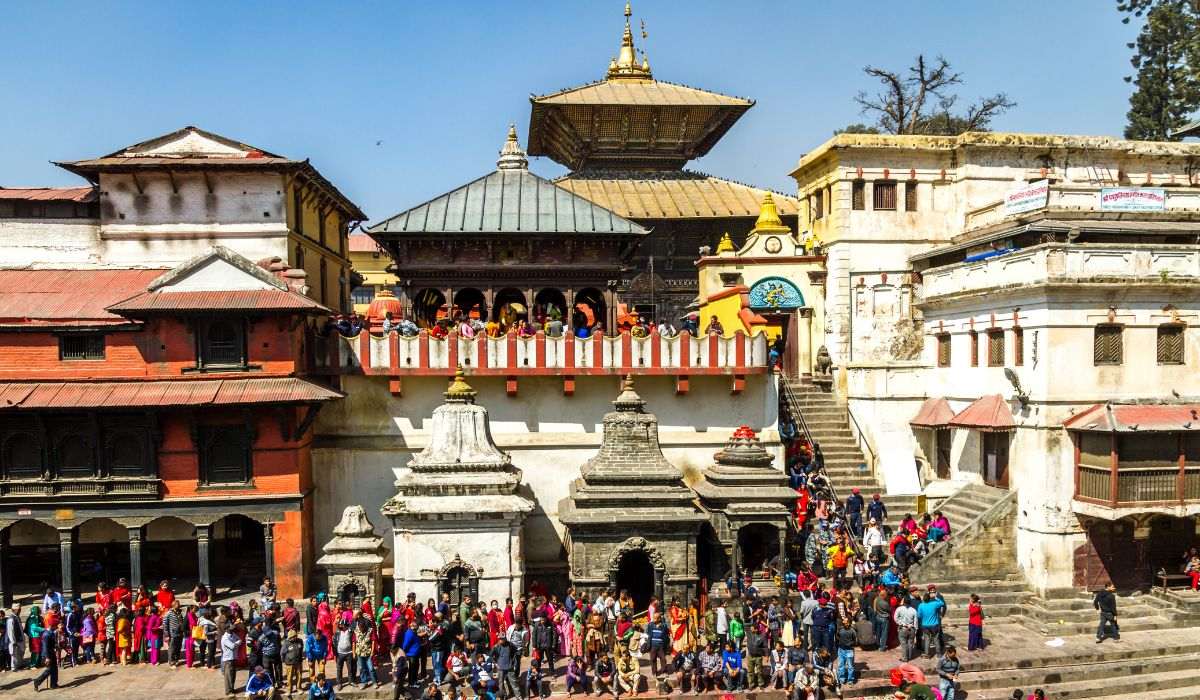
Pashupatinath
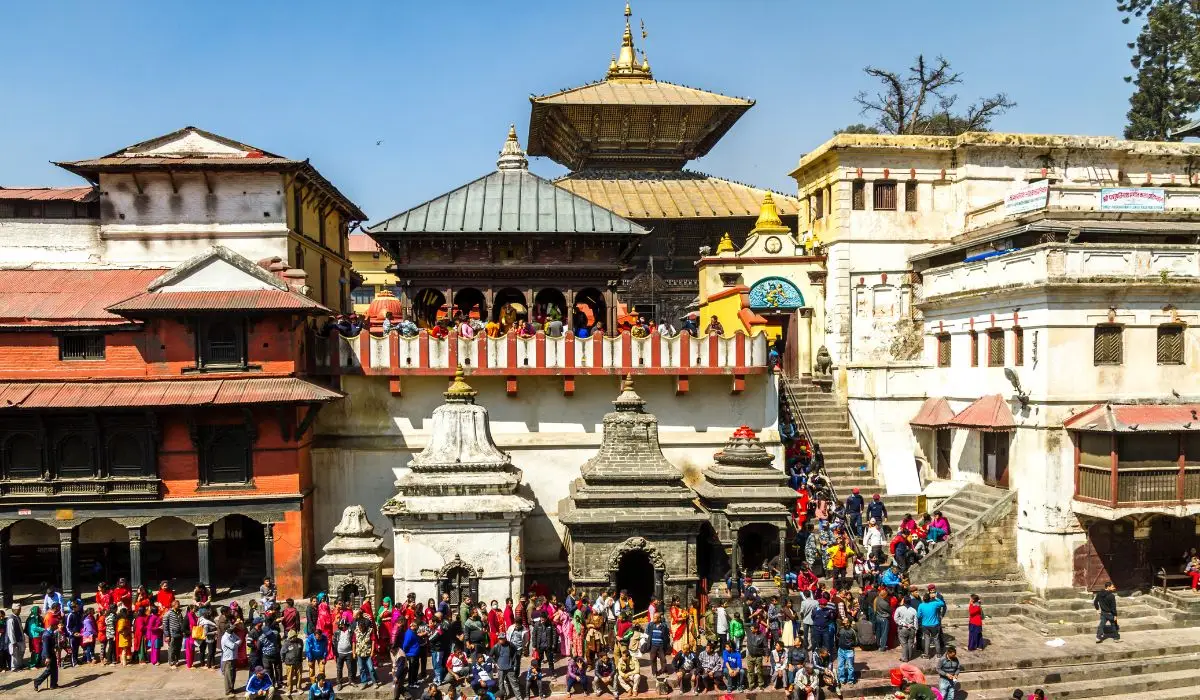
Pashupatinath is a complex of Hindu temples on the Bagmati River, dedicated to Shiva. The main temple is for Hindus only. Everyone can walk the grounds, the ghats (stone river steps) and the shrines around them.
Cremations take place on the riverbank, so please keep a respectful distance, and don’t photograph worshippers, priests or families in mourning. Read the Pashupatinath rules for non-Hindu visitors before you go. The Nepal Tourism Board lists the fee as NPR 1,000 for foreign visitors in November 2026, per day and per entry.
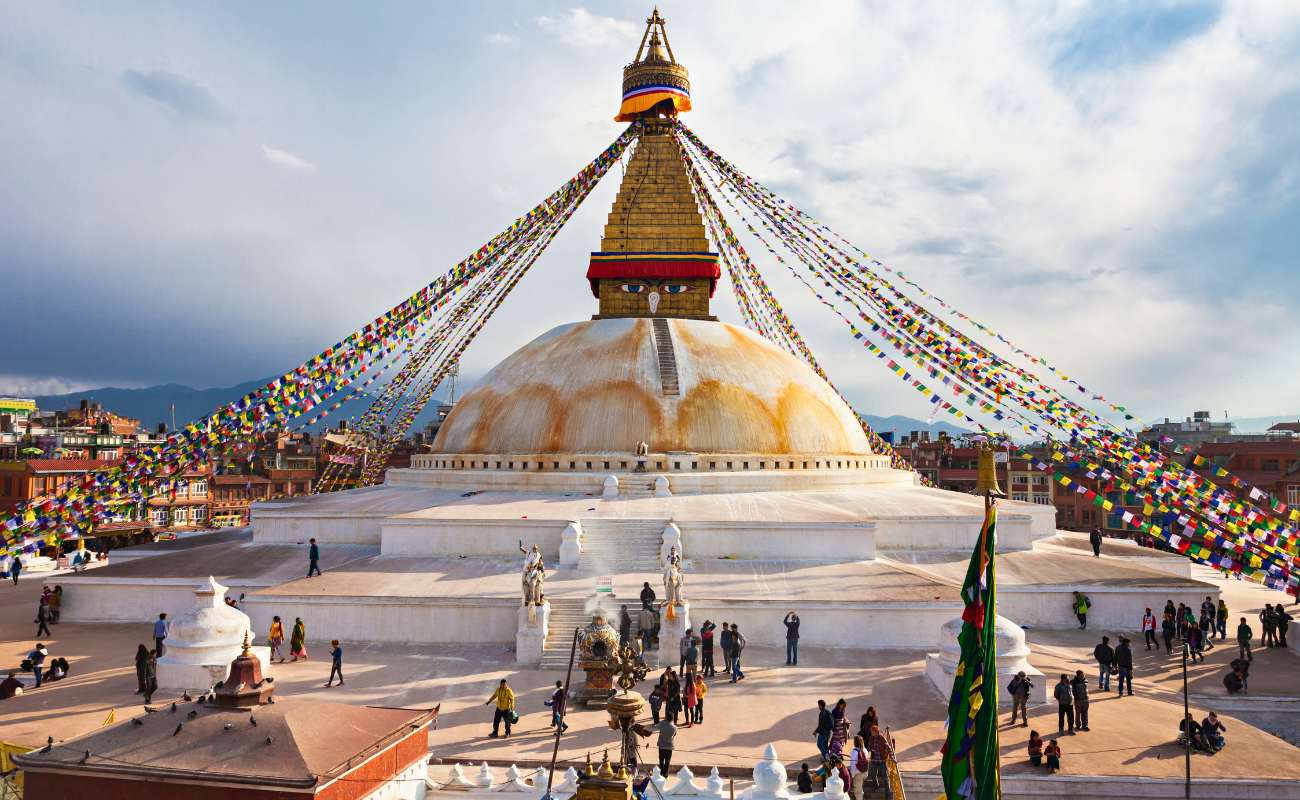
Boudhanath
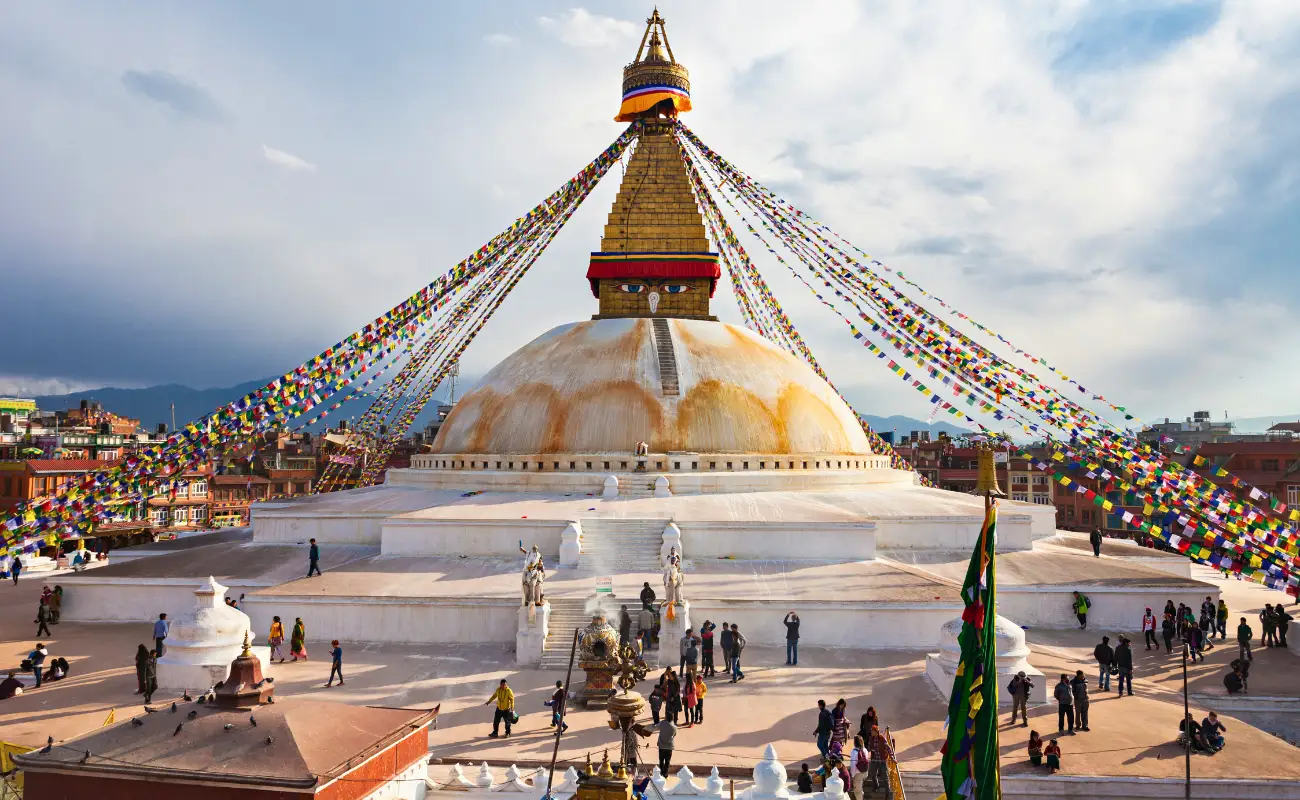
Boudhanath is a white stupa about 36 metres high, with more than 50 monasteries around it. Many Tibetan refugees settled here after 1959, and that still shapes the shops and food. Walk around it clockwise with everyone else, and spin the prayer wheels as you go if you like.
The 2015 earthquake badly cracked the spire. This was the first of the valley’s damaged World Heritage monuments to be rebuilt, reopening in November 2016.
How does this compare with the seven-site day?
The seven-site day adds three more sites and about three more hours, but it gives you far less time at each. A published seven-site itinerary allows 30 minutes each at Boudhanath and Pashupatinath.
| Tour | Time | Sites | Time at each site |
|---|---|---|---|
| Half day | 4 hours | 2 | About 1 hour or more |
| This tour | 6 to 7 hours | 4 | About 1 hour |
| 7 UNESCO sites in one day | 9 to 11 hours | 7 | 25 to 90 minutes in one published plan |
Patan can replace Kathmandu Durbar Square on a private tour. You’d swap one royal square for another, and you’d lose Hanuman Dhoka and the Kumari Ghar area.
Is this tour private or in a group?
You can take it either way, and the route is the same. A group tour is scheduled every day at a fixed time from a meeting point in Thamel, and other travellers join. It costs less per person, with an English-speaking guide and a set route and schedule. Hotel pick-up is a paid add-on.
A private tour costs more and is only your party, with hotel pick-up included. You choose the start time, can ask for a guide in your language, and can change the pace or swap a site. The price per person falls as your party grows.
Group tours run from 2 guests. If you’re the only guest booked, we tell you at least 24 hours before, and you can choose another day, an upgrade to private at the private price, or a full refund of anything you’ve paid. See private or group tours for the differences.
Where does lunch fall?
Lunch falls after the royal square, and you pay for it yourself. Basantapur and Indra Chowk, near the square, are known for Newar food such as chatamari and bara (a fried lentil cake), according to Nepal Traveller.
If you’re not hungry at 11:15 am, you can eat later at Boudhanath instead. Nepal Traveller described rooftop restaurants with stupa views there in 2018, and Tibetan dishes such as thukpa, a noodle soup.
What can go wrong, and how does the day change?
Traffic is the main risk, because this route crosses the whole city. The Kathmandu Post reported in June 2026 that 15.91 km of the 27 km Ring Road remained unwidened, including a stretch near UNESCO sites.
- Heavy traffic: on a private tour, the guide can shorten a stop, or drop one and tell you what you’ve missed.
- Rain: the Foreign Office says monsoon normally runs from June to October. Stone paths get slippery, and wet ghats need care.
- Festivals: one operator warns that festival days can close roads or fill the squares. Tell us your date when you ask.
- Haze: IQAir’s 2019 data shows the worst air from November to May. Bring a mask if that bothers you.
The clearest honest trade-off is Pashupatinath. You see it in daylight, when the riverbank is easy to understand, but you won’t see evening aarti on this tour.