What is Boudhanath?
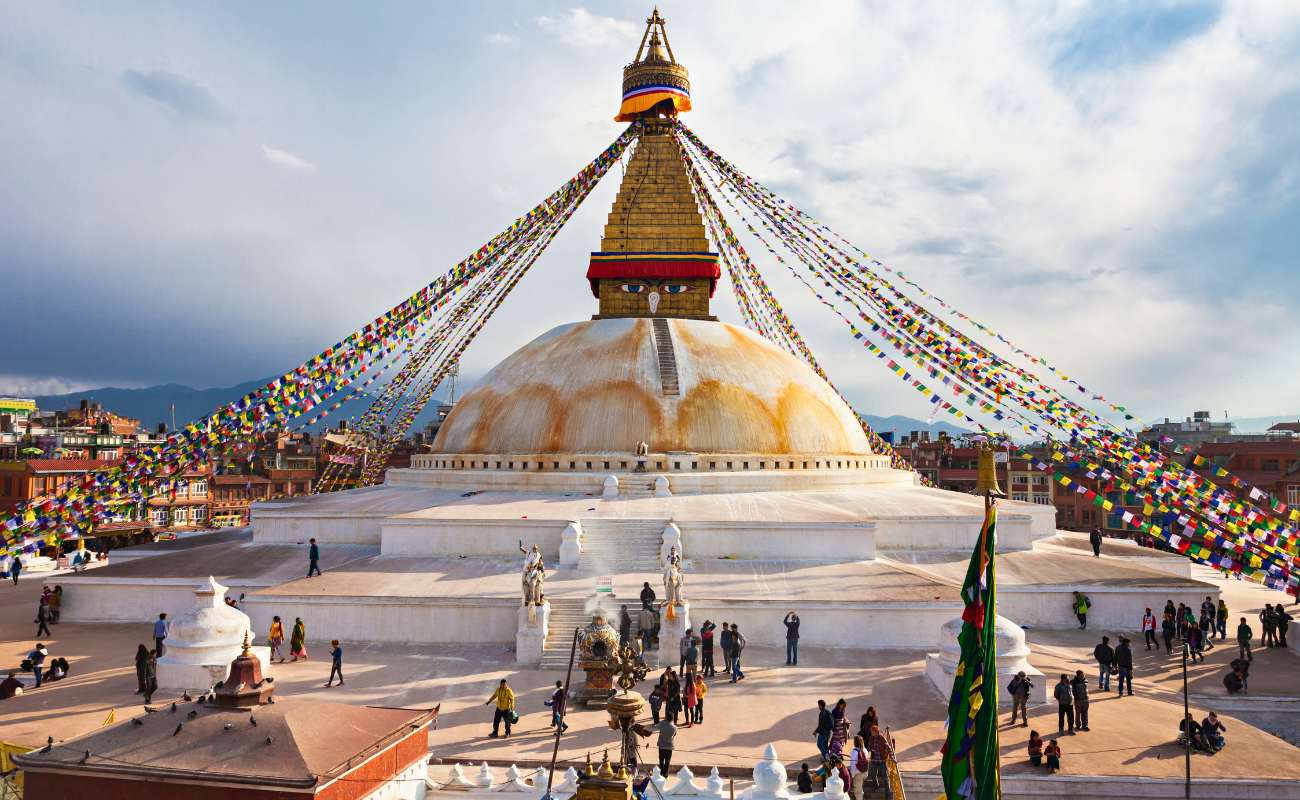
Boudhanath is a Buddhist stupa in the north-east of Kathmandu, and the largest in Nepal. Wikipedia gives its maximum height as 36 metres. It’s a major centre of Tibetan Buddhism in the valley, according to the Nepal Tourism Board.
It’s one of the seven monument zones of the Kathmandu Valley World Heritage property, inscribed in 1979. People also call it Boudha, Khasti Chaitya or Khasa Chaitya.
Where is it, and how far is it from Thamel?
The stupa is about 15 minutes by taxi from Thamel, according to kathmandu.im, and the time will be longer in traffic. The Nepal Tourism Board gives two distances from the centre of the city, 6 km and 8 km east. By our own map measurement, it’s 5.1 km in a straight line from Thamel.
It sits on an old trade route from Tibet to India, which entered the valley at Sankhu. Wikipedia says Tibetan merchants prayed here for centuries.

Who built Boudhanath?
Nobody can say for certain who built it, and the sources offer several stories. Newar and Tibetan traditions each tell the story differently.
| Period | Claim | Source |
|---|---|---|
| About 400 AD | Newar chronicles name Khaasti as a stupa found by King Vrisadeva or Vikramjit | Wikipedia |
| 5th century | King Manadeva (464 to 505 AD) built it to atone for killing his father without knowing | Newar tradition, via Wikipedia |
| Around the 5th century, reshaped in the 7th and 8th | Original building and later changes | Nepal Tourism Board |
| About 590 to 604 AD | King Sivadeva founded the town, or restored the chaitya | Gopalarajavamsavali, via Wikipedia |
| 8th century | Linked with Trisong Detsen and Padmasambhava in Tibetan records | Wikipedia |
| 14th century | Present structure most likely built | Wikipedia |
| Later | Ngakchang Shakya Zangpo restored the abandoned mound, probably giving it its size today | Wikipedia |
A Tibetan legend says a poultry farmer called Samvari built the stupa, and that her four sons were reborn as Trisong Detsen, Shantarakshita, Padmasambhava and Bami Trizher.
After the Tibetan uprising of 1959, the Tibetan diaspora built more than 50 monasteries here, along with guesthouses and shops, according to Wikipedia.
What is there to see at Boudhanath?
The stupa is the main sight, and the monasteries around it are the second. These are the named features.
- The dome and spire: A white dome, with the eyes of the Buddha painted on four sides above it and a spire of 13 levels.
- The mandala layout: Wikipedia describes the whole stupa as a large mandala, a sacred diagram.
- The prayer wheels: Set around the base, and inscribed with the mantra “Om Mani Padme Hum”.
- Prayer flags: Carrying the same mantra as the wheels.
- Hariti (Ajima) shrine: At the northern entrance, honouring a protector goddess. The Mahaguru Gompa looks after it.
- Shechen Monastery: In the lanes near the stupa.
- Ka-Nying Shedrub Ling: Home of the Rangjung Yeshe Institute.
- Dilyak Dabzang Monastery: Set up in 1963 near the stupa.
- Rooftop cafes: Kathmandu.im lists these as a place to see the dome from above.
Most monasteries nearby are open about 7 am to 12 pm and 2 pm to 6 pm, according to kathmandu.im. We couldn’t confirm this for any named monastery. Take off your shoes before entering their halls.

What did the 2015 earthquake do to Boudhanath?
The 25 April 2015 earthquake badly damaged the stupa and cracked its spire. The dome was largely spared, according to The Kathmandu Post. The whole structure above the dome had to be checked, and the gold spire was restored.
Boudhanath was the first damaged World Heritage site in the valley to be rebuilt, according to Wikipedia. Private donors paid for it, with no government money.
- Late 2015: Reconsecration began with a new central pole, according to Wikipedia.
- 17 October 2016: All the consecration relics were in place. Twenty-one days of rituals followed, led by Kagyu, Sakya, Gelug and Nyingma leaders.
- 22 November 2016: The stupa reopened to the public.
Sources differ slightly on the gold. Wikipedia says over 30 kg, and The Kathmandu Post says 31 kg for the pinnacle. Both put the total cost at about US$2 million. The Post also reported that United Nations experts worried a new concrete platform at the top might be too heavy.
Nationally, 825 of 920 damaged monuments had been rebuilt by August 2026, according to the Department of Archaeology.
How long do you need?
Allow about 1 hour for a few laps and a look around. This is our estimate. One published seven-site tour gives 30 minutes, which is enough for one slow lap. Add time for a monastery or a meal.

How do you walk the kora at Boudhanath?
The kora is the walk around the stupa, and you always do it clockwise. Keep the stupa on your right. Many people walk three or more laps, according to Wikivoyage.
- Start from the main entrance, and turn left so the stupa is on your right.
- Stay with the flow of people. Turn the prayer wheels in the same direction.
- After your laps, go up onto the stupa platforms if they’re open.
- Finish in the lanes at a monastery such as Shechen.
Kathmandu.im also mentions an inner kora path, through a low doorway on the south side. It’s busiest with monks around 4 am to 5 am.
What is the best time of day to visit?
Dawn and evening are the times most guides suggest. Kathmandu.im names 5:30 am to 7:30 am, for the monks’ kora and fewer tourists, then 6 pm to 8 pm. Wikivoyage says the stupa is at its best at night, and that incense and prayers fill the area on full moon and new moon days.
These come from travel guides, and we found no official advice.

What are the rules for dress and photography?
Dress modestly and walk clockwise. Take off your shoes before going into a monastery hall, according to kathmandu.im. See what to wear in Kathmandu for general advice.
- Ask before you take photos of monks or people at prayer.
- Don’t walk against the flow of the kora.
- Ask inside each monastery about photos, as we found no published rule.
Are there steps, and is it accessible?
The kora itself runs around the base of the stupa, and we found no source that describes its surface or any steps. Going up onto the platforms means climbing, according to Wikivoyage’s description of the access from the far side.
Ask us before you book if you use a wheelchair, and see our steps and mobility guide.

Which festivals happen here?
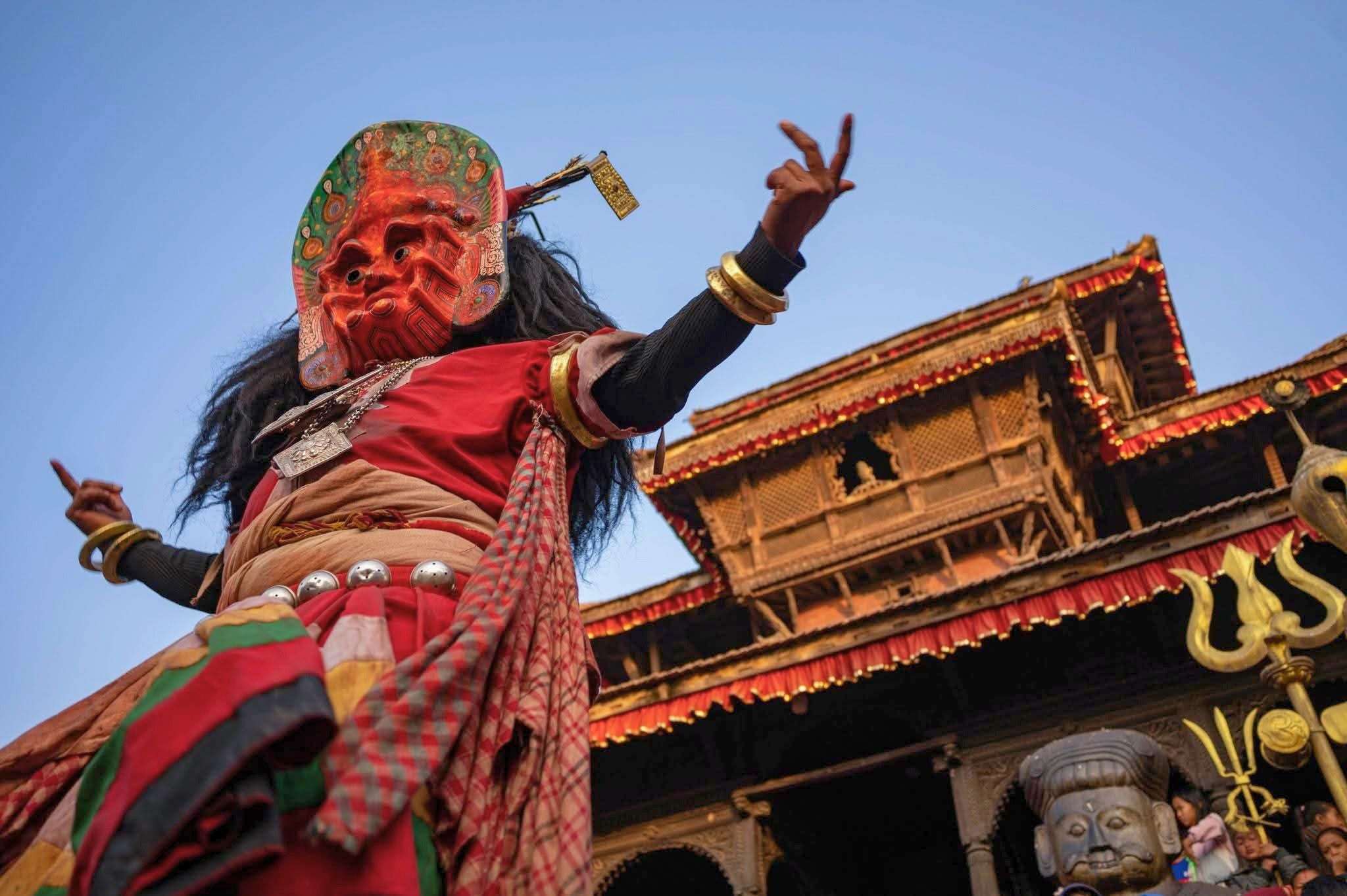
Crowds peak during Lhosar, the Tibetan New Year, and during Buddha Jayanti, the birthday of the Buddha, according to the Nepal Tourism Board. Wikipedia also mentions Lha Bab Duchen.
Expect more people and more ceremony on these days. See our Buddha Jayanti guide for the coming date.
How do you get there?
A taxi from Thamel takes about 15 minutes, according to kathmandu.im, and our Kathmandu taxi fare guide covers prices.
- Microbus or bus: From Kantipath or Jamal, with conductors calling “Chabahil, Boudha”, according to Wikivoyage. There are no English signs.
- Ring Road: To Chabahil junction, then a 20-minute walk.
- Tempo: From Ratna Park.
Wikivoyage’s fares are undated, so we don’t repeat them.

What is near Boudhanath?
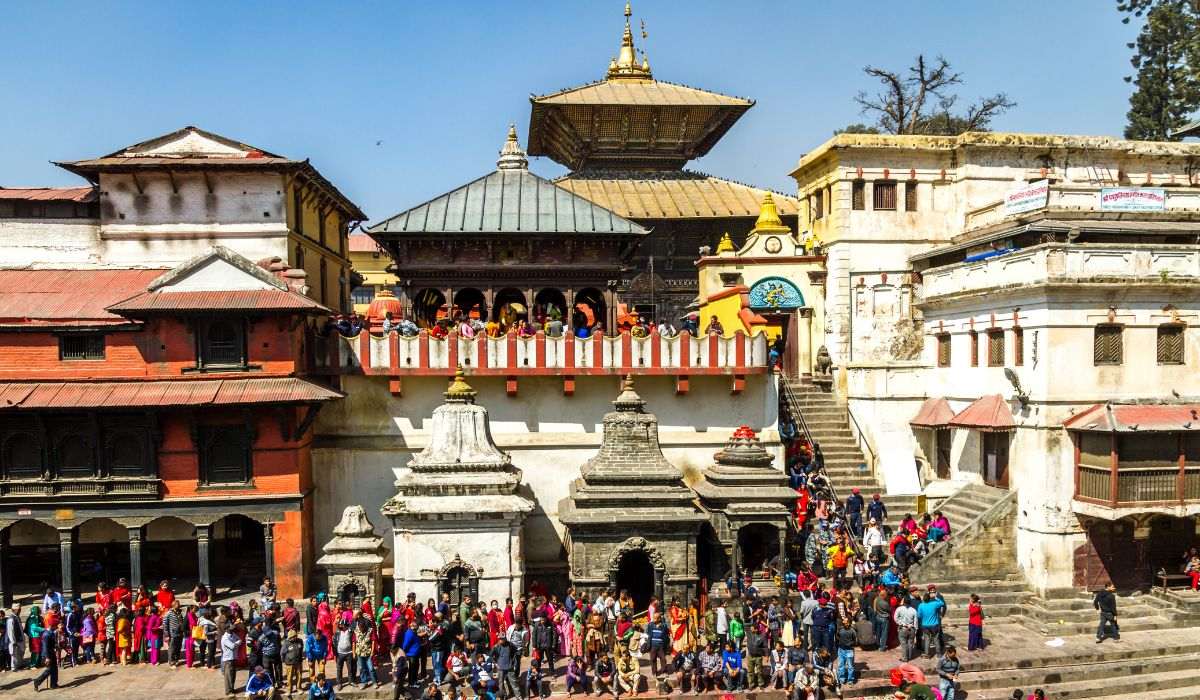
Pashupatinath is about 20 minutes away on foot, according to Wikivoyage. Read our Pashupatinath guide before you go, because the rules there are different.
- Guhyeshwari Temple: A temple on the Bagmati near Pashupatinath. Non-Hindus can’t enter.
- Charumati Stupa: A smaller stupa at Chabahil, a few kilometres away.
- Taragaon Museum: In the Hyatt Regency compound, according to Wikivoyage.
- Kopan Monastery: A meditation centre near Boudha.
How do you visit with a guide or alone?
Boudhanath is easy to visit alone. Buy a ticket, walk clockwise and follow the people around you. For a dawn visit, arrange your taxi the night before.
A guide helps more if you want to go into monasteries, or if you want to understand what you’re seeing. If you’re unsure, read do you need a tour guide in Nepal.
Four tours on this page include the stupa. Our Pashupatinath and Boudhanath tour pairs it with the river temple at dusk.