What is Changu Narayan?
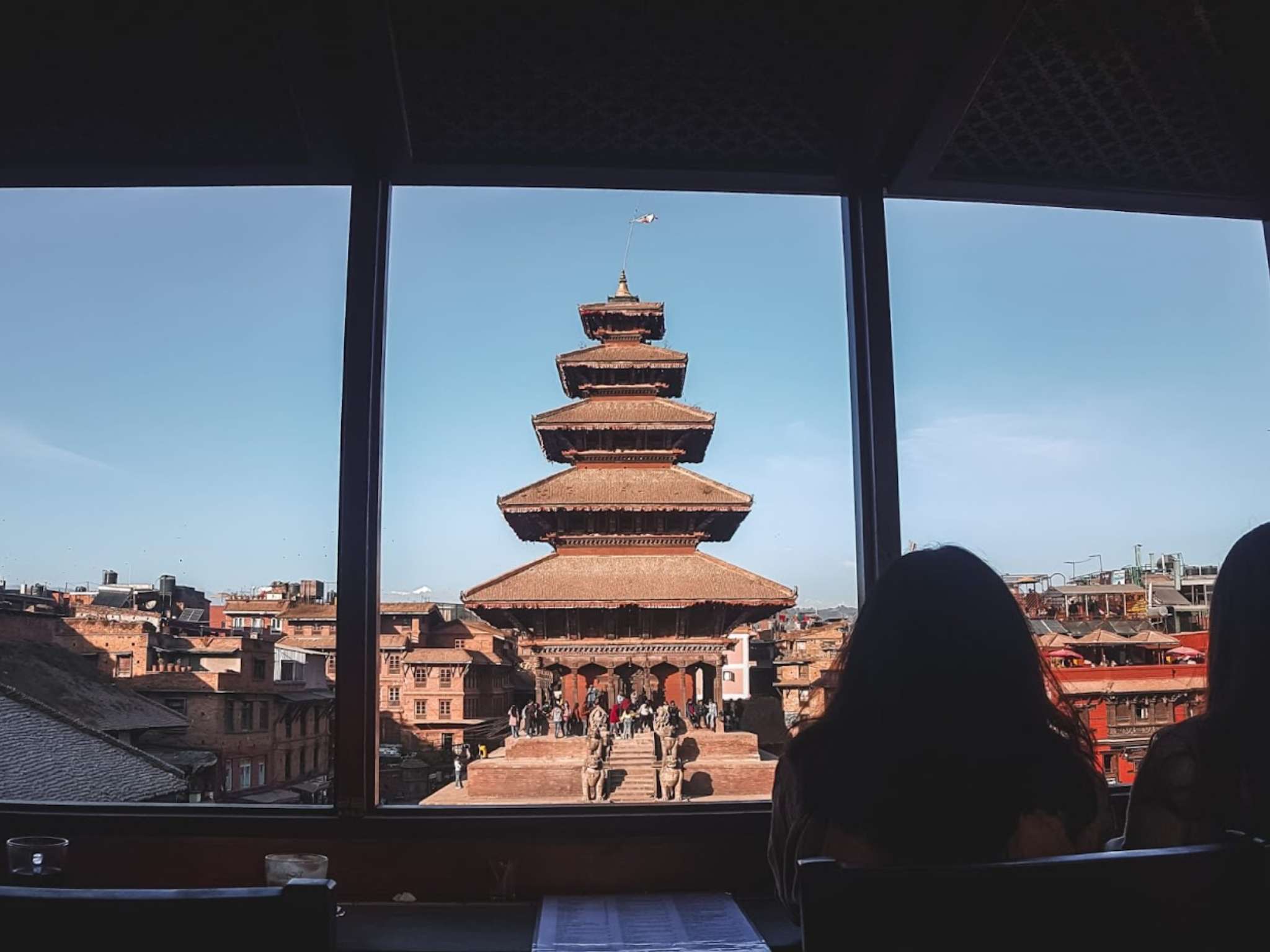
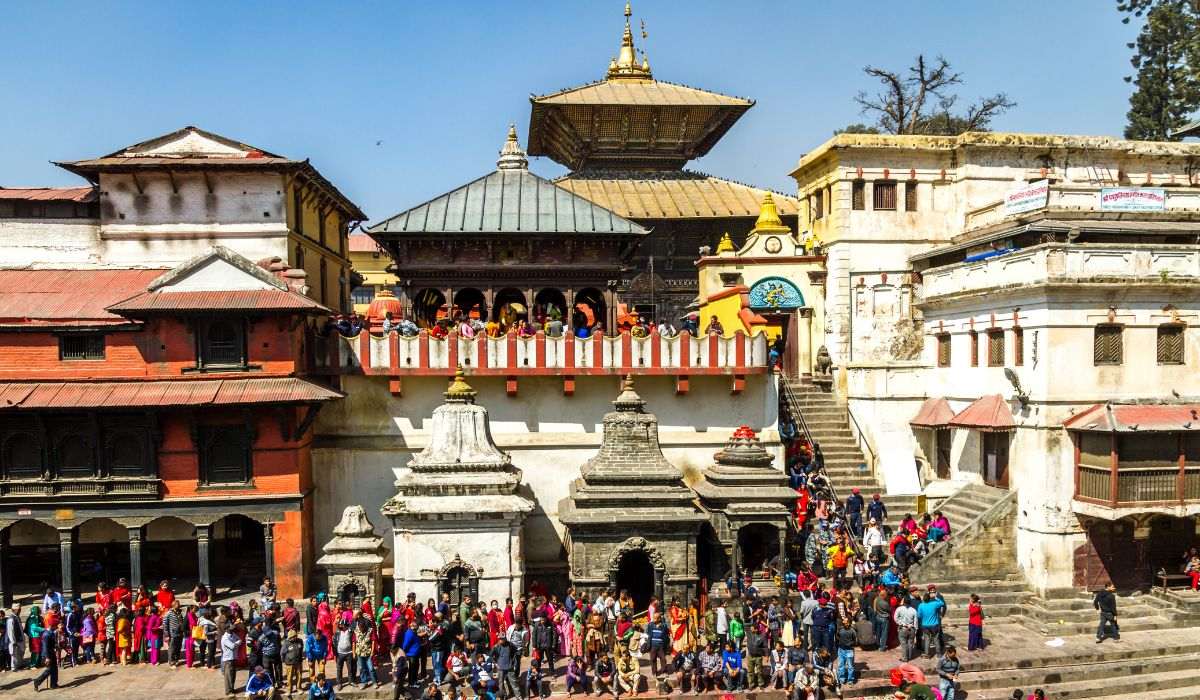
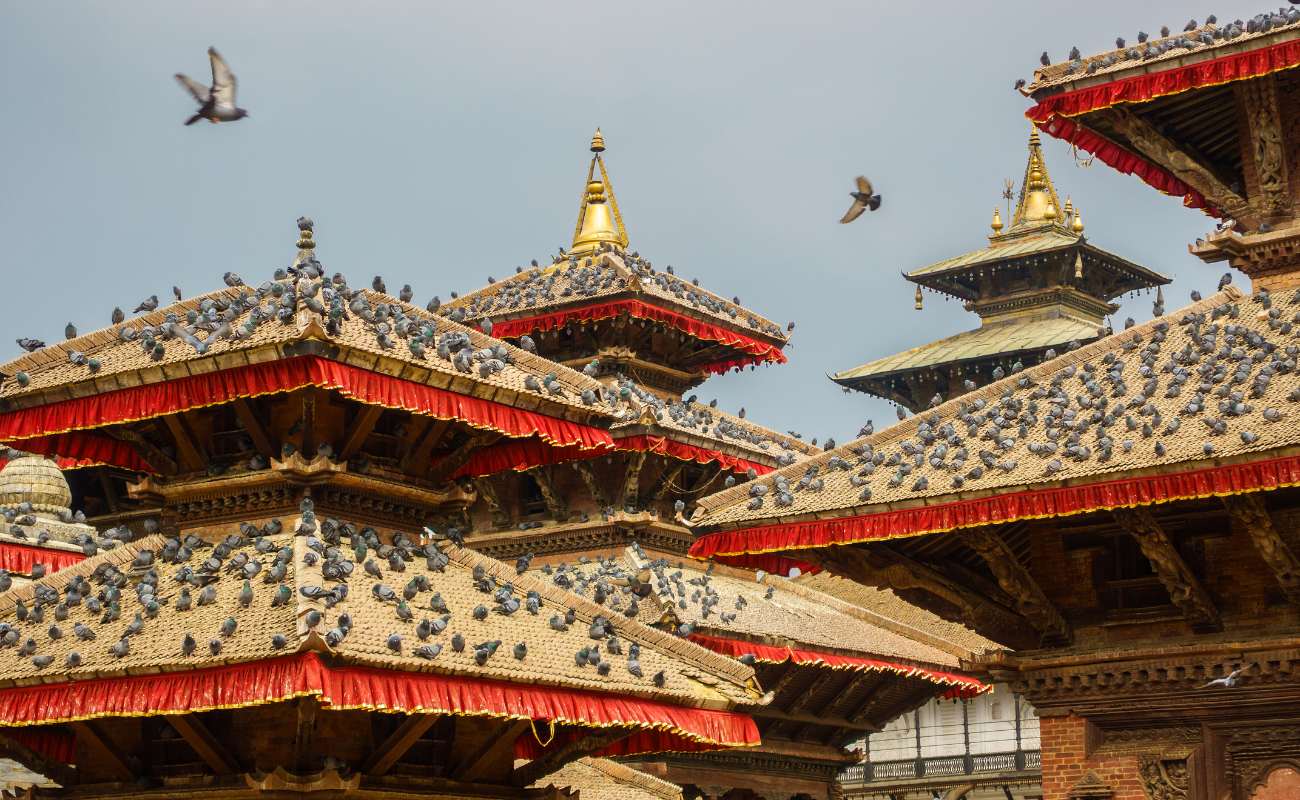
Changu Narayan is a Hindu temple to Vishnu on a ridge above Bhaktapur, in Changunarayan Municipality. The Nepal Tourism Board calls it one of the oldest pagoda-style temples in the valley, dating from the Licchavi period. It’s one of the seven monument zones of the Kathmandu Valley World Heritage property, inscribed in 1979.
Visitors come for its statues as much as the building. One photo archive says its stone statues, relief carvings and inscriptions are what it’s known for.
Where is it, and how far is it from Thamel?
Changu Narayan sits on a hill called Changu or Dolagiri, north of Bhaktapur and east of Kathmandu. Sources disagree on the distance from Kathmandu.
| Source | Distance from Kathmandu |
|---|---|
| Nepal Tourism Board | About 12 km |
| Bhaktapur.com | About 7 miles (11 km) |
| Windhorse Tours | About 19 km |
| Associated Press, 2017 | About 20 km |
| Mountains of Travel Photos | About 22 km |
By our own map measurement, it’s 11.6 km in a straight line from Thamel, so the road is longer. The altitude is also reported differently, at 1,541 m or about 1,600 m.

What is the history of Changu Narayan?
The firmest date at Changu Narayan is 464 AD, the year on a stone pillar set up by King Manadeva of the Licchavi dynasty. The pillar’s Sanskrit text is among the oldest inscriptions in Nepal. UNESCO calls the inscription here one of the earliest in the valley, from the 5th century AD.
Sources disagree on the temple itself. Wikipedia says it was built in the 4th century. The infobox credits Haridatta Barma as the founder, and bhaktapur.com credits King Manadeva. An Associated Press report calls it 5th-century.
| Date | What happened |
|---|---|
| 4th or 5th century | Temple founded, depending on the source |
| 464 AD | King Manadeva’s inscribed pillar |
| 1702 | Rebuilt after a fire, according to the Nepal Tourism Board |
| 1885 | Georg Buhler and Bhagawanlal Indraji first publish the inscriptions |
| 1899 | Sylvain Levi researches here using rubbings, after priests deny him the compound |
| 1975 to 2001 | Several statues are stolen, including the main one in 1981 |
| 1979 | UNESCO World Heritage listing |
| 2015 | The earthquake badly damages the temple |
A local story says a Kashmiri king’s daughter, Champak, married the prince of Bhaktapur, and that the temple takes its name from her.
What is there to see at Changu Narayan?
The courtyard holds some of the oldest sculpture in the valley. The Nepal Tourism Board dates the carvings to between the 5th and 12th centuries. Dates below vary between sources, so we show who says what.
- Garuda statue: A kneeling, life-size figure of Vishnu’s mount, facing the main entrance. It’s dated to the 5th century, and the Nepal Tourism Board notes its human-like form.
- Manadeva pillar: A stone pillar in front of the main entrance, with a chakra wheel on top. It bears the 464 AD inscription.
- Vishnu Vikranta: A stone image of Vishnu. It’s dated to the 8th century by Explore Nepal and Mountains of Travel Photos.
- Vishwarupa: A relief of Vishnu in his universal form. Explore Nepal says 8th century, and Mountains of Travel Photos dates a 10-headed Vishnu slab to the 5th or 6th century.
- Narasimha: Vishnu’s half-man, half-lion form. Mountains of Travel Photos says 11th or 12th century.
- Vishnu on Garuda: A relief north of the temple. Explore Nepal lists two such works, dating them to the 9th and 10th centuries. The Nepal Tourism Board says a 12th-century relief here appears on the Nepali 10-rupee note.
- Royal statues: A kneeling king and queen in a gilded cage. Mountains of Travel Photos names Bhupatindra Malla of Bhaktapur. Wikipedia and Explore Nepal name Bhupalendra Malla and Bhuvan Laxmi. Thieves took statues from here in 2001, according to Wikipedia.
- Guardian beasts: Pairs of elephants, lions, winged lions and griffins guard the four doors.
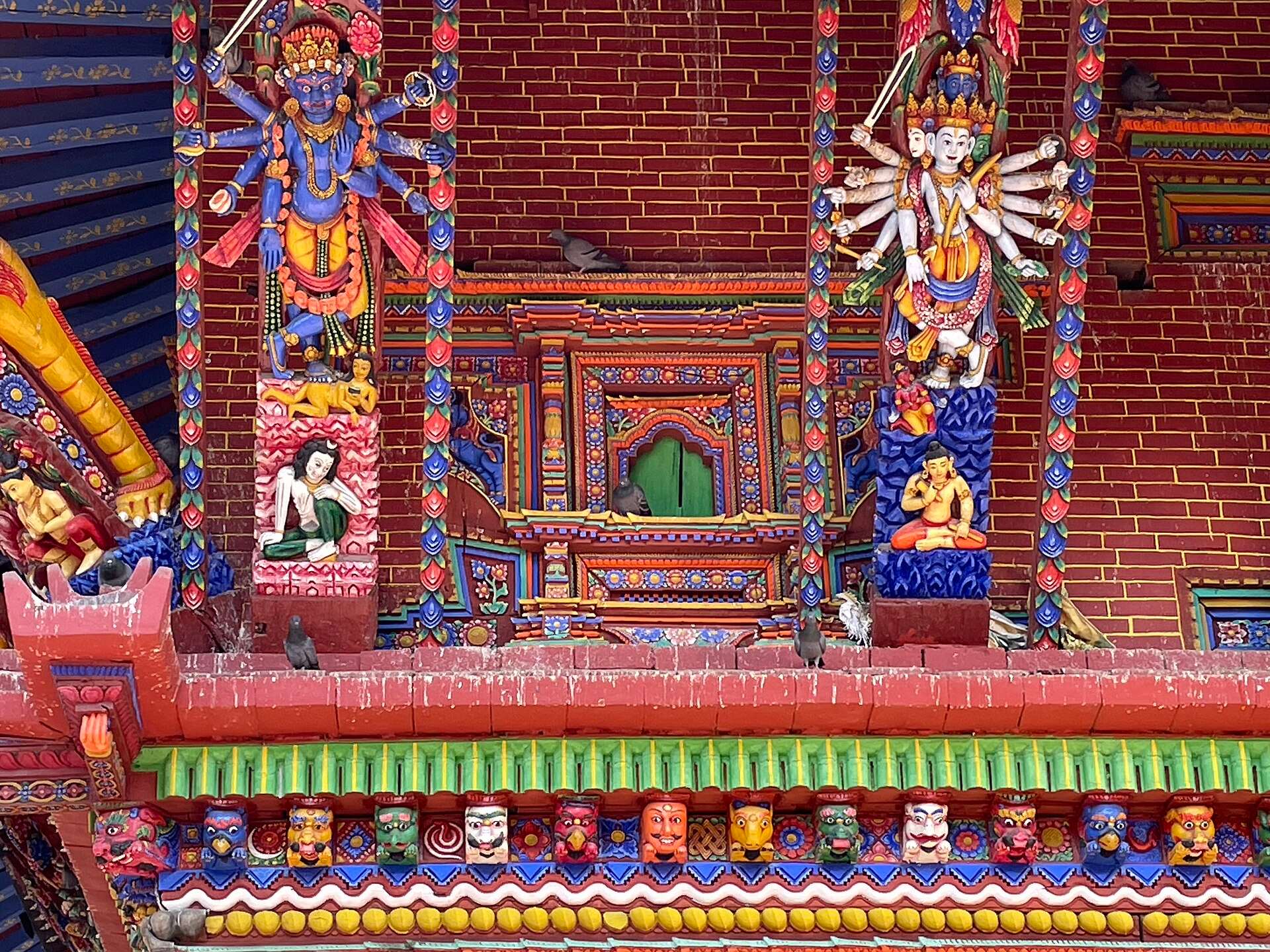
- Roof struts: Carved with many-armed Tantric deities and forms of Vishnu.
- Chinnamasta Temple: A shrine in the same compound.
- Kileshwor Mahadev Temple: A small 17th-century Shiva temple.
- Changu Museum: A small museum. Wikipedia lists a rhino-skin shield, a raincoat of leaves and rice said to be over 225 years old.

What did the 2015 earthquake do here?
The earthquake of 25 April 2015 and a sharp aftershock the next day twisted the main temple, knocked bricks from its walls and filled the courtyard with rubble, according to the Associated Press. In the village, three people died and 100 homes were damaged. The Kathmandu Post reported that two of the four temples were reduced to rubble.
The rebuilding story has conflicting versions.
- January 2017: The Associated Press described the temple propped up with temporary beams. British architect John Sanday was advising villagers on the work, and one small shrine had been rebuilt with German support.
- January 2018: The Kathmandu Post said the main temple was finished, at a cost of Rs 8.5 million paid by the Department of Archaeology. It said two other temples hadn’t been rebuilt.
- September 2018: The Rising Nepal, in a reposted report, said the temple reopened to visitors. It gave the cost as Rs 8 million, and also named the Chhinnamasta and Kileshwor temples as renovated. Tenders had been approved for the Laxmi Narayan Temple, Sankha Chakra Ganesh, Bhimsen Pati and Chaughera.
- Wikipedia: Says the quake destroyed the temple, and that a Chinese team supported work that took five years. We couldn’t confirm this in a second source.
We found no report after 2018 that says whether the remaining buildings are finished. Don’t assume they are.
How long do you need?
Sources range from 25 minutes to 2 hours. One published seven-site tour allows 25 minutes, while Windhorse Tours suggests 1.5 to 2 hours. Allow about an hour if the carvings interest you. That’s our estimate.

What is a good walking route?
This route starts at the main entrance and goes around the courtyard.
- Walk up from the car park or the village.
- Stop at the western main gate, with the Garuda and the Manadeva pillar.
- Walk around the temple, looking at the guardian beasts and roof struts.
- Find the Vishnu reliefs, including Vishnu Vikranta and Vishwarupa.
- See the Chinnamasta and Kileshwor shrines.
- Visit the Changu Museum, if it’s open.
What is the best time of day to visit?
We found no official guidance on the best time of day. A morning visit fits well with Bhaktapur later in the day, and Windhorse Tours recommends October to November and March to April as the best seasons. We found no official opening hours either.

What are the rules for dress and photography?
Dress modestly, and take off your shoes before entering a shrine, according to Windhorse Tours. Bhaktapur.com says only Hindus may enter the temple, while the Associated Press said in 2017 that only priests do. Bhaktapur.com also says you can photograph the temple but not the deity inside. See what to wear in Kathmandu for general advice.
Are there steps, and is it accessible?
Windhorse Tours calls the walk a short, steady uphill from the car park or the village below. An Onlinekhabar article of November 2025 says the temple has wheelchair access, with some difficulty. The temple also sits on a plinth about four feet high, according to Wikipedia.
We have no measured figure, so ask before you book. Our steps and mobility guide compares all the sites.

Which festivals happen here?
Harishayani and Haribodhini Ekadashi are the busiest days, according to the Nepal Tourism Board. Bhaktapur.com says events are held here especially on Ekadashi, the 11th day of each lunar fortnight. Wikipedia also lists Teej and Naag Panchami. We don’t have a date page for these, so check locally.
How do you get there?
A private vehicle or taxi is the simplest way, often as part of a Bhaktapur day. The Nepal Tourism Board says microbuses run from Bhaktapur. Bhaktapur.com says local buses from Ratna Park or Bagbazaar go to Bhaktapur and Changunarayan, followed by a short walk.
Some visitors walk in from Nagarkot, and our Nagarkot sunrise and hike tour does this. Our Kathmandu taxi fare guide covers road prices.
What is near Changu Narayan?
Bhaktapur Durbar Square is the natural pairing, about 5 km south in a straight line. See our Bhaktapur Durbar Square guide. Bhaktapur.com also lists restaurants and cafes at the site.
How do you visit with a guide or alone?
You can visit alone with no booking. Buy a ticket, pay in Nepali rupees and allow time for the walk up. Read the list above first, because there’s a lot to find in a small space.
A guide helps most with the sculpture, because the names and the stories behind each one aren’t obvious. Our guide on do you need a tour guide in Nepal can help you decide.
Four tours on this page include the temple. Our Bhaktapur day tour is the most direct way to see both sites in one day.