What is Khokana?
Khokana is a Newar farming village and oil-pressing town in southern Lalitpur, in Ward 21 of Lalitpur Metropolitan City. Newar people are the indigenous community of the Kathmandu Valley. Wikipedia counts 4,927 people in 1,056 households at the 2011 census.
The town is also called Jitapur. Wikipedia says King Amar Malla gave it that name after rebuilding its main temple.
Where is Khokana, and how far is it from Thamel?
Khokana is about 8 km south of Kathmandu, according to Wikipedia. The Kathmandu Post calls it a 20-minute ride from the city centre, and also says it’s a 10-minute drive from the Bagdole junction on the ring road and about half an hour from the airport.
By our own map measurement, it’s 8.9 km in a straight line from Thamel, and 4.8 km from Patan Durbar Square. Traffic can make the times above optimistic.

What is the history of Khokana?
Khokana’s main temple gives the oldest date we found, in the 15th or 16th century. Wikipedia says Amar Malla built or rebuilt the Rudrayani temple, and gives 1513 AD in one place. Cultural Survival says the 15th century.
Older origins are told as local tradition. Wikipedia and Cultural Survival say the first settlement was at Kudesh, near Sikali Temple by the Bagmati, before people moved to higher ground. Cultural Survival cites claims of a much older settlement, which we couldn’t check.
Khokana is known for one modern first. Chandra Shamsher, the Rana prime minister, had it lit with electricity in 1911, according to Wikipedia and The Kathmandu Post. Wikipedia calls it the first town in Nepal to have electric light, and the Post calls one house here the first to have it. Holy Mountain Treks says Bungamati also got electricity before Kathmandu.
Who lives in Khokana?
Newar families live here, and Wikipedia names the Maharjan and Dangol groups. Many older women are more comfortable in Nepal Bhasa, the Newar language, than in Nepali, The Kathmandu Post said in 2022.
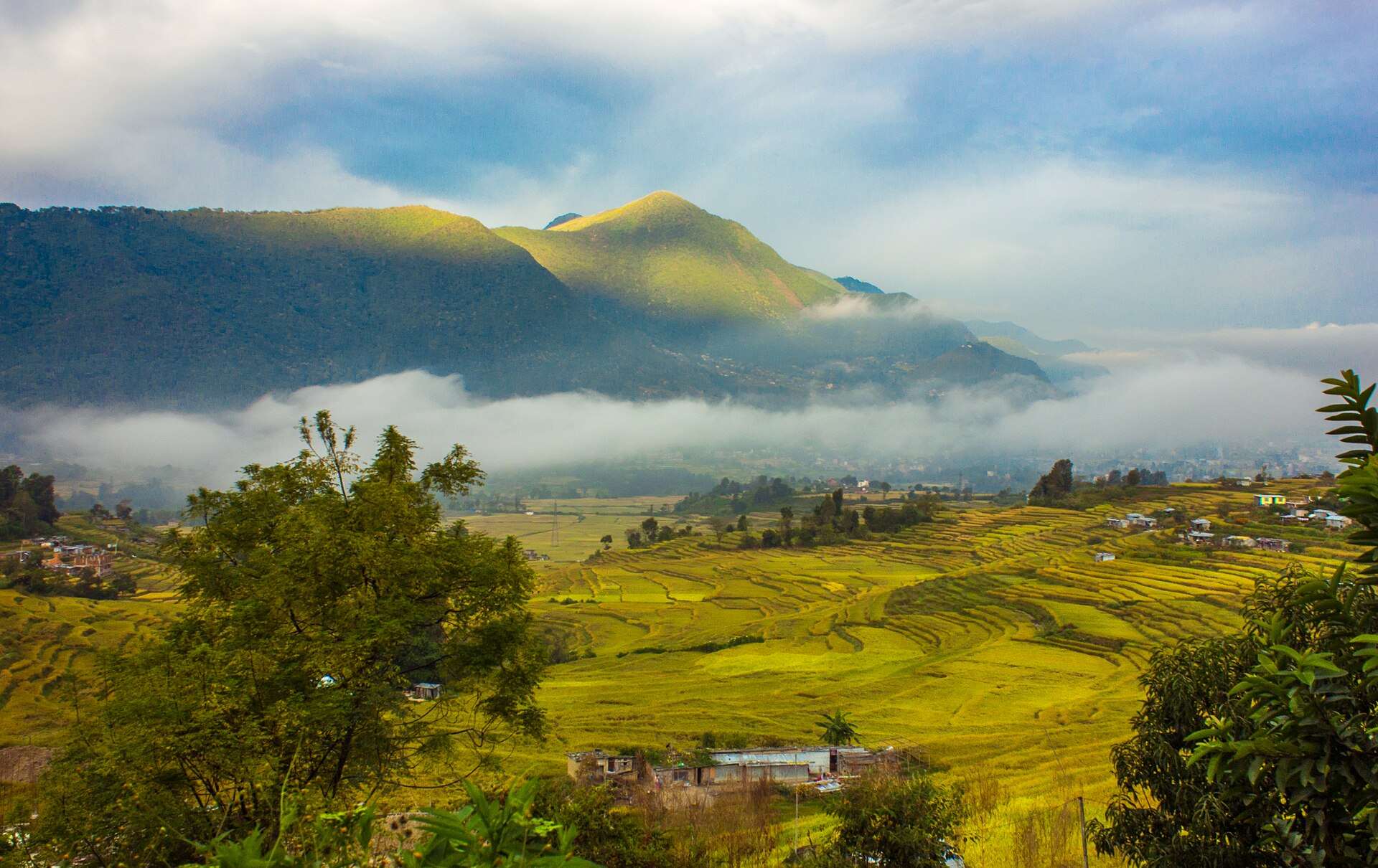
Farming has shrunk. The Post said in 2022 that most fields it saw were bare, and that new housing projects are changing the town. This is a working community with its own worries, and it isn’t a museum.

What is there to see in Khokana?
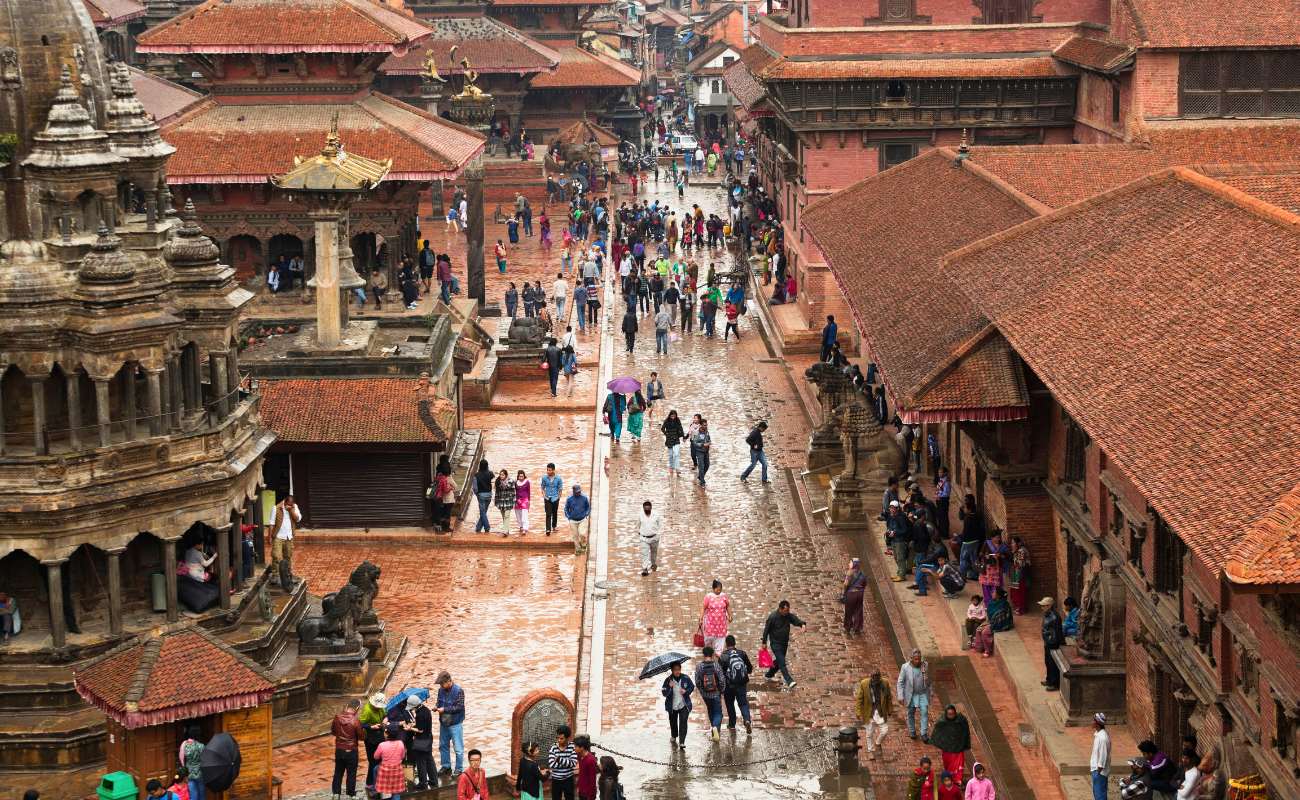
The main square, its temple and the lanes around it are the heart of the visit. Every lane eventually opens onto the square, Chwe Lachhi, says The Kathmandu Post.
- Rudrayani Temple: A three-storey pagoda-style temple to the town’s mother goddess, in the square. See the earthquake section below.
- De Pukhu: A rectangular pond in the square, used for rituals.
- Jitapur Mandap: A public rest house destroyed in 2015 and later rebuilt, according to Wikipedia.
- Bijuli Ghar: The house said to be the first lit by electricity, now a museum. It was closed in both Post reports, though the 2024 report says the first bulb’s stand can still be seen.
- Mustard oil mills: Often community-owned. Staff told the Post in 2024 that one press was about 300 years old.
- Sikali Temple: A three-storey pagoda in meadows outside town, also a popular picnic spot. Loud music and crowds are possible, the Post said in 2022.
- Other ponds and stone taps: Wikipedia lists several around the town.
How much of the oil trade survives?
Less than the village’s reputation suggests, though the sources disagree. The Kathmandu Post said in 2022 that only three mills remained, with seed imported from India. In 2024, the same paper described small mills every few hundred metres. Buy oil if you see it, and treat a working press as a bonus.
What did the 2015 earthquake do to Khokana?
Locals say more than 800 houses were damaged in the 2015 earthquakes, according to The Kathmandu Post. That’s a large number for a town of about 1,000 households, though it isn’t an official count, and we couldn’t find a death toll for the village.
The Rudrayani temple was severely damaged. Rebuilding started slowly, and its progress is the main thing we can’t confirm.
- Early 2022: The Post reported that work had started only a few months earlier. Workers were building the base.
- September 2024: Tourism Info Nepal said it had been four years since work began, which doesn’t fit the Post’s early 2022 report. Over NPR 40 million had been spent, costs could pass NPR 100 million, and a lack of funds meant perhaps two more years. The deity was in a temporary shelter.
- Saarang, undated: Also places the deities in a temporary shelter.
We found no report that the temple is finished, so expect building work. Nationally, 825 of 920 damaged monuments had been rebuilt by August 2026, according to the Department of Archaeology. See our earthquake restoration guide for the wider picture.

What is the Fast Track dispute in Khokana?
The Kathmandu-Tarai Fast Track is a planned expressway, and its starting point has been at Khokana. Many residents oppose it, and this conflict is live as of 2026. The Kathmandu Post gave its length as about 71 km in 2026, and other sources say 72.5 km to 77.7 km.
The Kathmandu Post said in 2022 that five large projects were planned around Khokana, including two major roads, a power line and a new city. Residents worry about losing farmland and sites such as Sikali. The Post also said many families have already accepted compensation.
- 2018: Residents of Pharsidol (also spelled Farsidol), in Bungamati, protested at a project site over land and low compensation, the Post reported. It said Khokana residents had been protesting too. Cultural Survival describes police using tear gas that year.
- 17 February 2026: Prime Minister Sushila Karki told officials to find an alternative to the Khokana starting point, New Business Age reported. The plan was to move the toll plaza to Pharsidol, about 3.3 km away.
- April and May 2026: After a change of government, the Cabinet still hadn’t decided on that plan, and work in the Khokana section had stalled, the Post reported. Officials told it the whole project needs at least two or three more years.
- 18 June 2026: A new land notice was published, Cultural Survival says, after an earlier understanding to move the starting point south to Farsidol, in Bungamati.
- 29 June 2026: Residents staged a protest in the fields. Indigenous Voice also says construction at Khokana has stopped over the dispute.
Those two June reports come from groups that campaign for Indigenous rights. We found no later report from a national paper or the government, so the plan may have moved on. You may see army camps or fencing, and it’s best not to photograph them or to join in any protest.
When is the best time to visit Khokana?
We found no official advice, and dry weather makes the stone lanes and farm tracks easier. The UK Foreign Office says the monsoon normally runs from June to October.
Festival dates matter most, and sources give them differently. The Post says Sikali Jatra begins at Ghatasthapana, the start of Dashain, in mid to late September, and elsewhere says it falls in October. That date moves each year, and our Dashain guide gives 30 September for 2027. Wikipedia places the Rudrayani festival over the first seven days of Dashain, which locals observe in place of the usual Dashain. The Post also names Kartik Purnima, a full-moon day. See our Dashain guide for the coming dates.
What can go wrong in Khokana?
Closed sites are the most likely disappointment, along with construction around the temple.
- Closed museum: See the section above. Don’t plan your visit around it.
- Getting lost: The Post says losing your way on the trails to Sikali is very possible, and that locals are willing to help.
- Change: The Post said in 2022 that roads are now paved and new housing is going up. Don’t expect an untouched medieval village.
- Protests: The Fast Track dispute is about residents’ land and sacred sites. Keep clear of any protest, and ask about the road before you go.
How should you behave in Khokana?
Treat this as somebody’s home, and remember that temples and ponds here are in daily use. Musicians play for the goddess daily, according to Saarang, and ask before you photograph them or anyone else.
Some rituals involve animal sacrifice, including at De Pukhu pond around Gai Jatra, according to The Kathmandu Post and Wikipedia. You may not want to watch, and you shouldn’t film it. The UK Foreign Office advises avoiding shorts and sleeveless tops in holy places.
How do you get to Khokana on your own?
A taxi is the simplest way, and you can ask the driver to wait. The Kathmandu Post says a cab from the airport takes around half an hour, and the old town is about 5 minutes on foot from the local bus park.
We couldn’t confirm a bus route or a fare, so ask at your hotel. Our Kathmandu taxi fare guide covers road prices in general.
What is near Khokana?
Bungamati is the closest stop, 20 to 30 minutes on foot according to Holy Mountain Treks. See our Bungamati guide for the temple and its long rebuilding. Patan is the other natural pairing, and our Patan Durbar Square guide covers the royal square.
Should you visit Khokana with a guide or alone?
You can walk around alone. Our Patan tour’s sample plan allows about 1 hour 30 minutes here, including lunch. The Kathmandu Post says small local places around the square serve choila, a Newar spiced meat dish, and other food.
A guide helps with the lanes, the mills and the language, as some older residents are more comfortable in Nepal Bhasa. Our Patan day tour stops here after Patan and Bungamati.