What is the Garden of Dreams?
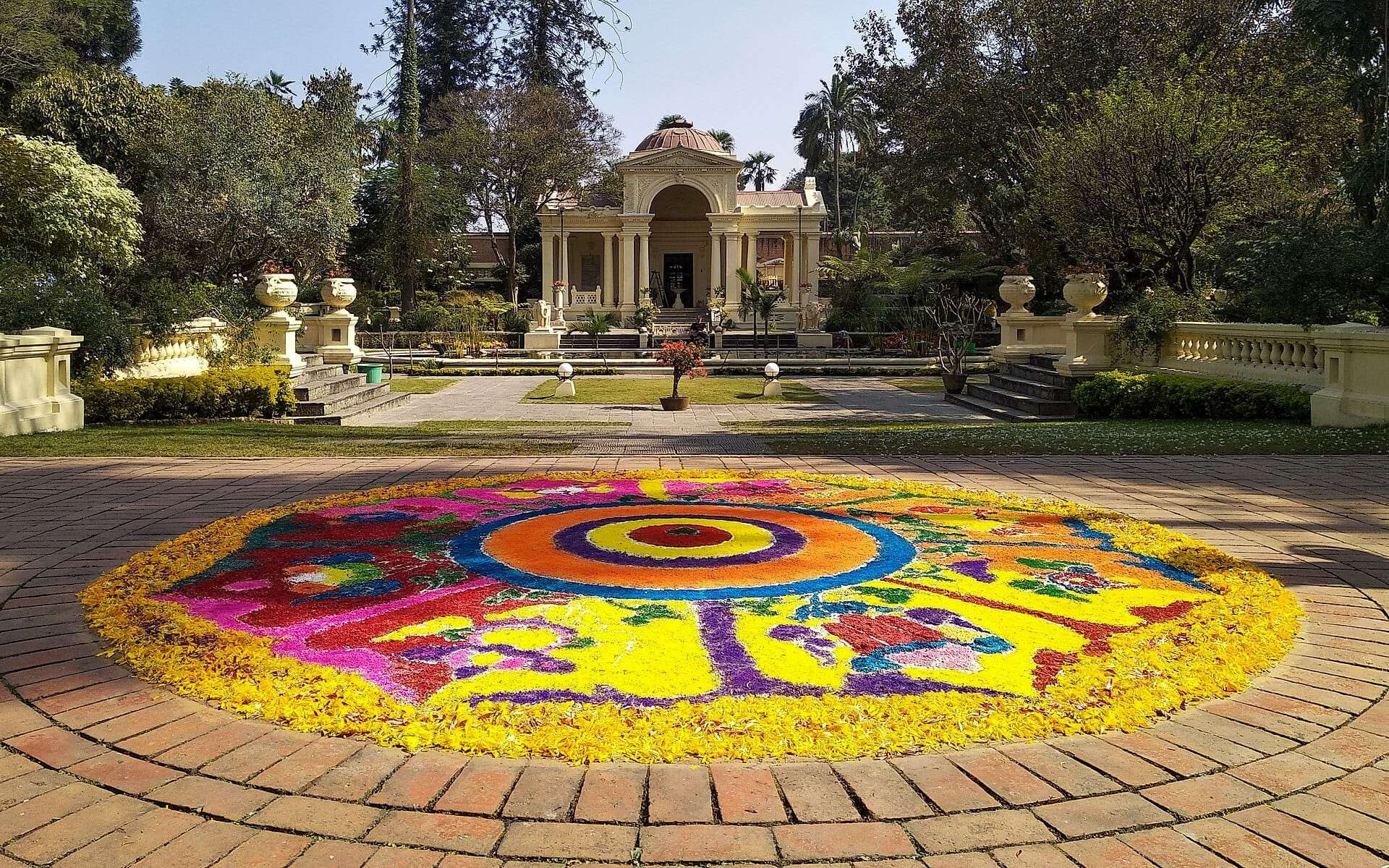
The Garden of Dreams is a walled neo-classical garden in central Kathmandu, also called Swapna Bagaicha or the Garden of Six Seasons. Field Marshal Kaiser Shumsher Jung Bahadur Rana (1892 to 1964) built it next to his palace. Wikipedia dates it to about 1920.
Today it’s a paid public garden with lawns, pavilions, ponds and a café. The garden’s own FAQ says it’s run by the Garden of Dreams Development Board, an autonomous body under Nepal’s Ministry of Education.
Where is the Garden of Dreams in Kathmandu?
The garden sits behind a long wall on Tridevi Marg, at the edge of Thamel. Nepali Times reported in 2006 that its main gate faces the SAARC Secretariat. Wikivoyage describes it as a short walk from the main Thamel crossroads, behind the Kaiser Mahal building.
Kaiser Mahal is the palace next door. Wikipedia says Chandra Shumsher, Kaiser’s father and then prime minister, had it built in 1895 for his son. The former royal palace, now the Narayanhiti Palace Museum, is across the road to the east.
If you’re staying in Thamel, you can walk there. By our own map measurement, the garden is about 0.5 km in a straight line from the centre of Thamel.

What is the history of the Garden of Dreams?
The garden was laid out in about 1920 by Kishore Narsingh, an architect to Kaiser’s father. According to the garden’s history page, he and his brother had also designed Singha Durbar, the government palace finished in 1907.
Kaiser built six pavilions, one for each of Nepal’s six seasons, the garden’s history page says. It mixed formal European pieces, such as pergolas, balustrades, urns and statues, with looser planting. Wikipedia compares the style to English gardens of the Edwardian era. The garden’s website says Kaiser kept a large library of books on gardening and architecture, which shaped the design.
After Kaiser died in the 1960s, the garden passed to the government and was neglected for decades. Wikipedia says that in 1998 it was due to be cleared for a commercial building. The education minister at the time stopped the work.
How was the Garden of Dreams restored?
Austrian Development Aid funded the restoration, working with Nepal’s Ministry of Education, according to the garden’s website. The Austrian group Eco Himal carried it out, and the Austrian architect Götz Hagmüller led it. Onlinekhabar wrote in 2017 that he’s best known for restoring the Patan Museum and this garden.
Sources give slightly different dates:
| Source | What it says |
|---|---|
| Wikipedia | Restoration ran from 2000 to 2007 |
| The Himalayan Times, September 2006 | Eco Himal began renovating in 1998, at a cost of about one million dollars |
| Nepali Times, September 2006 | Six years of work, a one million dollar project, with restoration and staff training to continue until September 2007 |
Both 2006 newspapers said the garden would open to the public on 8 October 2006. The Himalayan Times reported that about half the original garden was already lost. Wikipedia also says only half remains.
What is inside the garden?
The garden is mostly lawns, paths, ponds and pavilions, with a café and bar. The Nepal Tourism Board lists neo-classical pavilions, fountains, garden furniture, a Chinese moon gate, pergolas, balustrades, urns and birdhouses.
Of the six seasonal pavilions, sources disagree on how many survive. The Himalayan Times named three in 2006: Basanta (spring), Grishma (summer) and Barkha (monsoon). Wikivoyage says two. Wikipedia gives both three and six in different places.
Nepali Times described these features after the restoration in 2006:
- Amphitheatre: Seating for 300, with a moat around the stage.
- Main pond: With four copper lotuses that gave off gas flames at night.
- Hidden garden: A water cascade that blocks Thamel’s street noise. The paper called it the coolest spot in summer.
- Rotunda: Rebuilt to match a lost original.
Wikivoyage adds a small exhibition of old photos of the garden.
The garden’s size is unclear. Wikipedia gives 6,895 square metres, and The Longest Way Home gives the same figure in square feet. The Nepal Tourism Board says 24 acres, which is far larger.

What are the Garden of Dreams opening hours?
The garden’s website says it’s open from 9 am to 9 pm every day, as of November 2026. Not every source agrees.
| Source | Hours |
|---|---|
| Garden website and FAQ, November 2026 | 9 am to 9 pm, every day |
| Wikivoyage, April 2026 | 9 am to 9 pm, every day |
| The Longest Way Home, October 2026 | 9 am to 10 pm, last entry 9:30 pm |
Plan around 9 pm, which is what the garden itself says. Check at the gate if you want to stay late.
How much is the entry fee?
Foreign visitors pay NPR 400, and Nepali visitors pay NPR 150, according to the garden’s price page in November 2026. That page shows no effective date. Wikivoyage (April 2026) and The Longest Way Home (October 2026) list the same two prices.
| Ticket | Price | Source |
|---|---|---|
| Non-Nepalese visitor | NPR 400 | Garden website, November 2026 |
| Nepalese visitor | NPR 150 | Garden website, November 2026 |
| Children, seniors and visitors with disabilities | 50% off, every day | Garden website, November 2026 |
| Ten tickets bought together | 25% off | Garden website, November 2026 |
| Annual membership, non-Nepalese | NPR 5,000 | Garden website, November 2026 |
| Annual membership, Nepalese | NPR 3,000 | Garden website, November 2026 |
The garden lists no separate rate for SAARC, Indian or Chinese visitors. It also doesn’t say what age counts as a child or senior, so ask at the counter.
Prices have risen since the garden opened. Nepali Times reported 2006 prices of Rs 160 for foreigners and Rs 80 for Nepalis. This ticket isn’t part of the seven-site UNESCO fees.

What are the rules?
The garden’s FAQ sets a few clear rules. It calls the garden “neither a party palace nor play ground”.
- No outside food: You can’t bring your own food. Eat at the café inside.
- No games: Games aren’t allowed.
- Keep it quiet: No loud sound or music that disturbs other visitors.
- Keep your ticket: The website says security staff may ask to see it.
- Commercial photos: A board notice says recent photos must not be published commercially without its consent.
In 2006, Nepali Times reported that rock concerts, weddings and fashion shows were banned. We couldn’t confirm whether that still applies.
What is Kaiser Café?
Kaiser Café is the restaurant inside the garden, run by Basera Boutique Hotel, according to the garden’s website. The FAQ says it serves international, Nepalese and Continental food for breakfast, lunch and dinner.
You need a garden entry ticket even if you only want to eat at the café. The FAQ says admission fees are a main source of money for upkeep. Wikivoyage notes the same rule.
The café was part of the plan from the start. The Himalayan Times wrote in 2006 that a Viennese café and restaurant were added to help pay for maintenance. The Longest Way Home also lists a Barkha Bar for ice cream and cakes, a tea salon and the Kaiser Gallery, as of October 2026.

How long should you stay, and when should you go?
How long you stay depends mostly on whether you sit down to eat or read. Wikipedia puts the garden at under 7,000 square metres, so a walk around the paths doesn’t take long. We found no reliable source giving a set visit time.
The Longest Way Home says late afternoon is the best time, for cooler shade and fewer people. Because the garden stays open until 9 pm, it also works as an evening stop after a day of sightseeing. If you come in summer, Nepali Times pointed to the hidden garden by the cascade as the coolest spot.
The garden is a place to rest, not a major monument. One travel guide calls it a nice place to relax if you have spare time, and says it isn’t essential.
What is near the Garden of Dreams?
Thamel, Kaiser Mahal and the Narayanhiti Palace Museum are all within a short walk. Distances below are our own straight-line map measurements, so walking routes are a little longer.
| Place | Straight-line distance | What it is |
|---|---|---|
| Kaiser Mahal | Next door | Kaiser Shumsher’s 1895 palace, which Wikipedia says houses the Kaiser Library |
| Thamel | About 0.5 km | Kathmandu’s main tourist area, with many shops and restaurants |
| Narayanhiti Palace Museum | About 0.5 km | The former royal palace, a museum since 2008, says Wikipedia |
| Asan Bazaar | About 0.8 km | An old market crossroads in the old city |
| Kathmandu Durbar Square | About 1.3 km | The old royal square, a UNESCO-listed site |
The Narayanhiti Palace Museum is the easiest pairing, since it’s just across the road. You can walk on through the old markets to Asan Bazaar and then Durbar Square.
Can you visit the Garden of Dreams on a tour?
None of our day tours goes inside the garden. Our Kathmandu Street Food Walk covers Thamel and Asan, so the garden is close to its route, and you can visit it on your own before or after.
For a walk on from here to Durbar Square, our Kathmandu self guided walking tour page sets out a route. Tickets are sold at the gate, says the garden’s website.