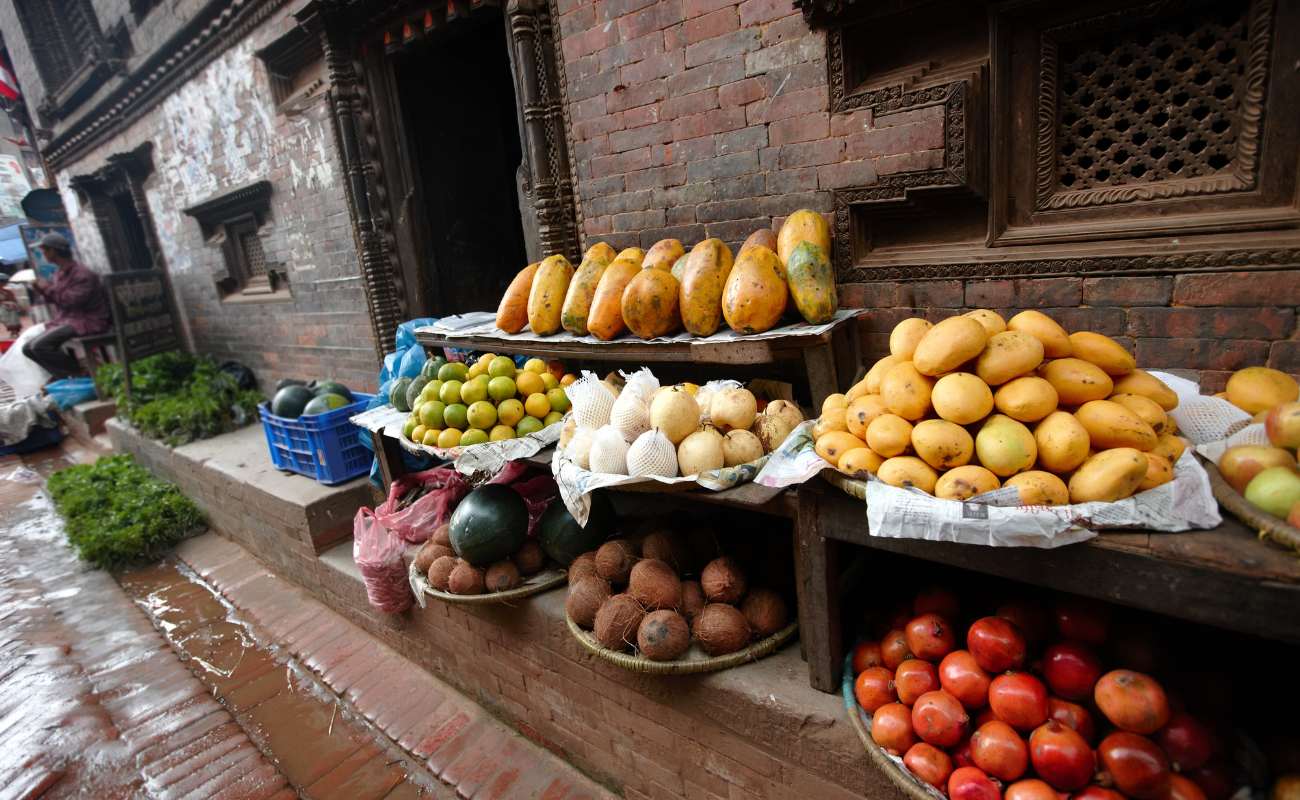
What is local food in Kathmandu?
Local food in Kathmandu means everyday Nepali meals such as dal bhat, momo dumplings, and the dishes of the valley’s Newar community. The spellings below vary a lot, so you’ll see other versions on menus.
Most English writing about Newari food comes from blogs and travel companies. Wikipedia’s article on it carries warnings about weak sourcing. We’ve used several sources and named them where they differ.
Which Newari dishes should you know?
The dishes below are the ones you’re most likely to see on a Newari menu. Descriptions come from Onlinekhabar and Nepal Traveller, unless noted.
| Dish | What it is | Good to know |
|---|---|---|
| Samay baji | A feast plate served at festivals, weddings and celebrations, with beaten rice, spiced soybeans, boiled egg, wo, chhwela and a small cup of aila | Wikipedia also lists lentil pancakes, rice pancakes, fried fish, pickles and greens |
| Bara (also wo) | A fried cake of ground black lentils. Sources draw the line between bara and wo differently | Often topped with egg or minced meat |
| Chatamari | A thin rice-flour crepe with toppings, often called “Newari pizza” | Ask what the toppings are |
| Chhwela (also choila) | Buffalo meat mixed with spices, often roasted or grilled over a flame first | Sources differ, see below |
| Kachila | Raw minced buffalo marinated with spices, mustard oil and spring onions | Raw meat, see below |
| Sapu mhicha | Buffalo leaf tripe filled with bone marrow | Wikipedia lists it among feast foods |
| Yomari | A steamed rice-flour dumpling filled with molasses and sesame or khuwa (a milk product) | The sweet of Yomari Punhi, on 24 December 2026 |
| Lakhamari | A fried sweet coated in sugar syrup | A sweet, not a meal |
| Juju dhau | Thick, creamy, slightly sweet yoghurt from Bhaktapur, set in small clay pots | Wikipedia also ties it to Bhaktapur |
Sources describe choila differently. Wikipedia says the buffalo is boiled or smoked. Onlinekhabar describes a version roasted over a hay fire or charcoal until black, and Nepal Traveller says it’s grilled over an open flame. Great Kathmandu says it’s documented in fire-roasted and boiled forms, and its own menu uses chicken or lamb. So what you get depends on the kitchen.
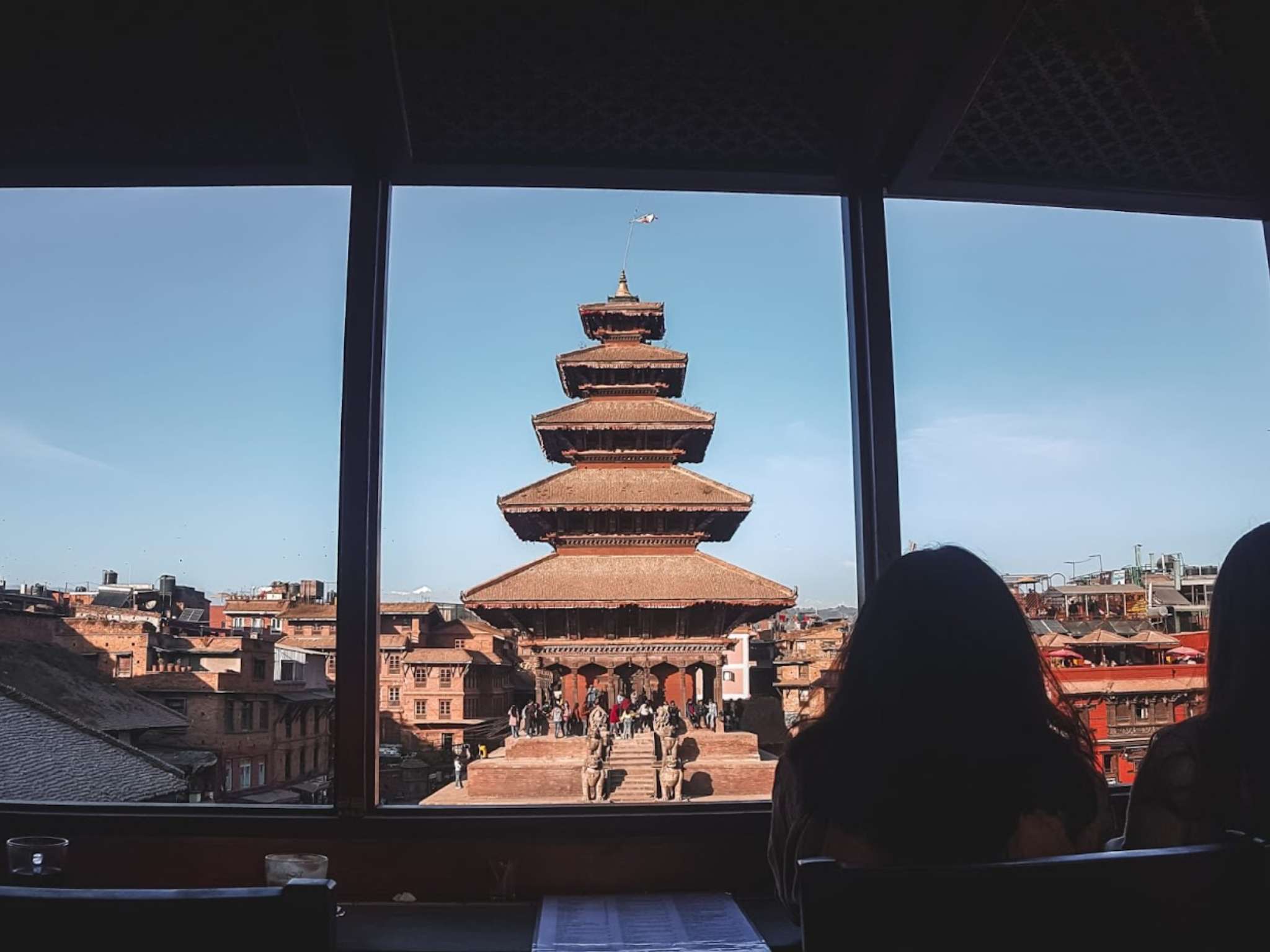
Great Kathmandu also describes pancha kwa, a soup of several ingredients named in the Nepal Tourism Board’s recipe book. If you visit Bhaktapur Durbar Square, you can ask about juju dhau there.

What are momo?
Momo are steamed or fried dumplings, and you’ll find them across Kathmandu. Tiny Living gives that plain description. We didn’t find a good source on fillings, so ask if you avoid meat.
Their origin isn’t settled. Great Kathmandu says the Nepal Tourism Board’s recipe book says momo “are thought to have travelled from Tibet with Newari traders”. It calls this an origin story rather than a fact, and we agree. Pride Nepal Travel lists momo at about US$1 to $3, in an undated 2026 guide.
What is dal bhat?
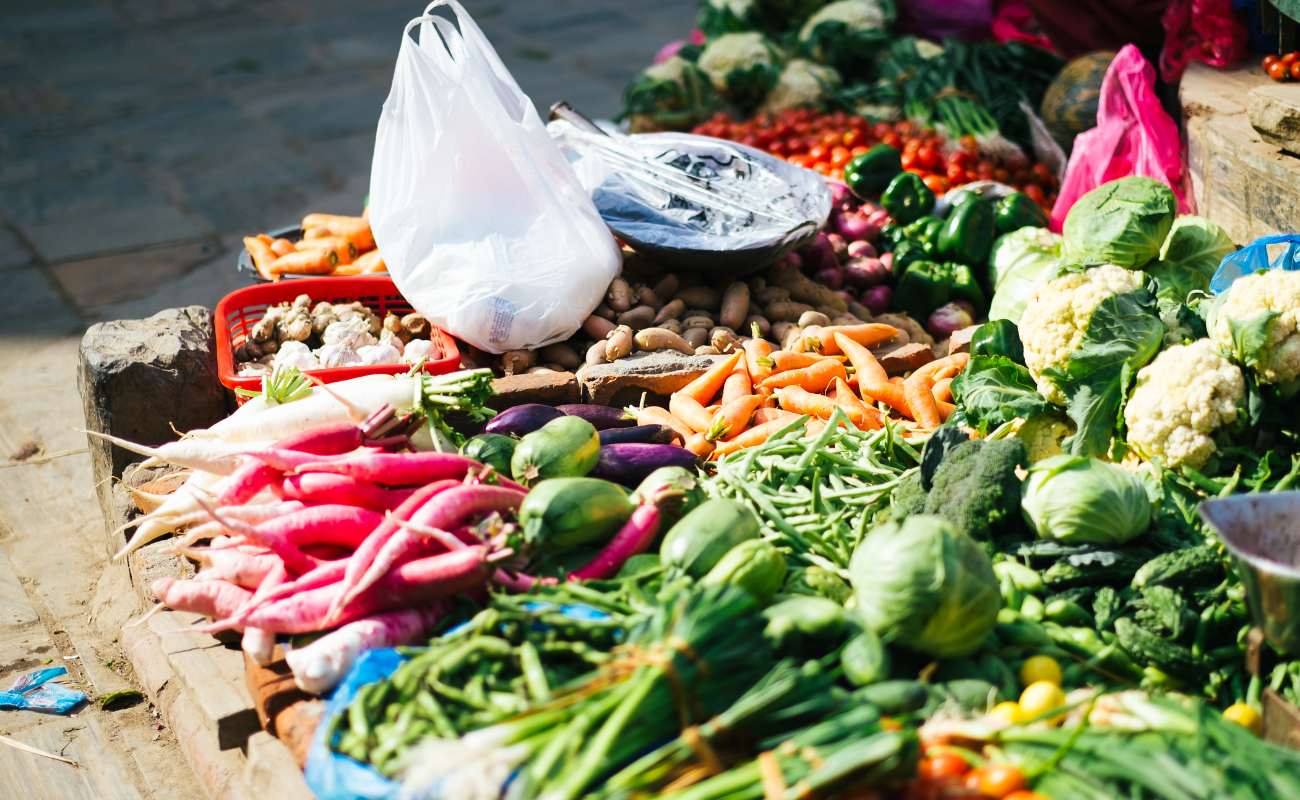
Dal bhat is the everyday meal of rice, lentil soup, a vegetable curry and pickle, sometimes with meat or greens. Tiny Living says local eateries often give free refills of rice, dal and vegetables, and calls it a safe choice for sensitive stomachs. Pride Nepal Travel gives about US$1 to $2.

What local drinks should you try or avoid?
Two traditional Newari drinks are alcoholic. Wikipedia lists aila as a liquor and an anti as the jar it’s kept in, while Nepal Traveller calls it a rice wine. Thwon is a rice beer. Sip either one slowly until you know how strong it is.
Be careful with home-made spirits and unknown bottles. The UK government warns of methanol poisoning in alcoholic drinks in Nepal, and says it can’t be detected by taste or smell. Get urgent medical care for any symptoms. It also warns of drink spiking, so don’t leave drinks unattended.
How do you avoid getting sick from food?
Eat food that’s hot and freshly cooked, drink only sealed or boiled water, and ease into street food slowly. The risks are real. The US CDC says typhoid risk among visitors to Nepal is among the highest in the world, and that hepatitis E is endemic.
- Water: the CDC says tap water isn’t safe, and to drink only boiled or bottled water. A 2022 government test, reported by the Kathmandu Post, found nearly 70 percent of valley samples contaminated, including jar water. Choose sealed bottles. Numbeo lists 1.5 litres at about NPR 35.
- Food choice: Canada’s advice is “Boil it, cook it, peel it, or leave it”.
- Busy places: Tiny Living suggests busy eateries, where turnover is higher and food is fresher, and leaving street food until after your first few days.
- Season: the CDC says cyclospora, a gut parasite, spreads mainly from May to October, peaking in June and July.
- Vaccines: the CDC recommends hepatitis A for unvaccinated travellers, and typhoid for most. Ask a travel clinic.
- Pregnancy: the CDC says hepatitis E poses a serious risk to pregnant travellers, and no vaccine is commercially available. Get advice before you travel.
Kachila needs its own warning. It’s raw meat, which doesn’t fit Canada’s advice above to boil it, cook it, peel it, or leave it. We suggest skipping it if you’ve a sensitive stomach or are pregnant. If you’re unsure, leave it out. You can still order the rest of the plate.
For wider health and safety advice, see is Kathmandu safe.

How much does local food cost?
A meal at an inexpensive Kathmandu restaurant costs about NPR 150 to 500, with NPR 300 as a typical figure, according to Numbeo, updated 4 November 2026. A three-course meal for two at a mid-range restaurant is about NPR 1,500 to 5,500. Check your bill for a service charge before you tip.
Full daily budgets are on the Kathmandu trip cost page. If you’d like someone to order for you, our street food tour runs through Thamel and Asan market, and you can tell us any food limits when you ask about a date.