Is 2 days in Kathmandu enough?
Yes, two full days is enough for all seven UNESCO monument zones, with real time at each one. You won’t see every back lane, and you won’t have time for a sunrise at Nagarkot. For most first-time visitors, it’s still the best balance of time and effort.
The seven sites split neatly into a western day and an eastern day. Day one stays in the city and Patan. Day two starts near the airport and works out to the east of the valley.
What should you do on day one?
Day one covers Swayambhunath, Kathmandu Durbar Square and Patan Durbar Square, the three western sites. All three are close together, so most of your day is spent on foot.
The drive allowances here are our own planning figures, because we couldn’t find a published dataset for these legs. Times assume you start in Thamel.
| Time | What to do | Notes |
|---|---|---|
| 8:00 am | Leave your hotel | Swayambhunath is about 4 km away, according to Maya Manor Hotel |
| 8:30 to 9:45 am | Swayambhunath | NPR 200. A road reaches near the top, so the stairs are optional |
| 9:45 to 10:15 am | Drive to Kathmandu Durbar Square | About 2 km in a straight line, through old lanes |
| 10:15 to 12:00 | Kathmandu Durbar Square | NPR 1,000, including the Tribhuvan Museum |
| 12:00 to 1:00 pm | Lunch | Walk towards Asan market if you have the energy |
| 1:00 to 1:45 pm | Drive to Patan | About 4 km in a straight line. kimkim says to expect about 30 minutes from Thamel |
| 1:45 to 4:30 pm | Patan Durbar Square and museum | NPR 1,000, including the Patan Museum |
| 4:30 to 5:30 pm | Return to your hotel | Rush hour, or stay for an early dinner in Patan and leave after 7 pm |

What should you do on day two?
Day two covers Pashupatinath, Boudhanath, Changu Narayan and Bhaktapur, in that order. Go early, because you want to beat rush hour and be out of Bhaktapur before evening.
In Your Pocket warns that leaving for Bhaktapur after 3 pm can turn an afternoon visit into an evening one, so this plan gets there by lunchtime.
| Time | What to do | Notes |
|---|---|---|
| 7:30 am | Leave your hotel | Beat the rush hour that starts around 8 am |
| 8:00 to 9:00 am | Pashupatinath | NPR 1,000. The main temple is for Hindus only |
| 9:00 to 9:30 am | Drive to Boudhanath | Under 2 km in a straight line |
| 9:30 to 10:45 am | Boudhanath | NPR 400. Walk around the stupa clockwise |
| 10:45 to 11:30 am | Drive to Changu Narayan | About 6.5 km in a straight line, longer by road |
| 11:30 am to 12:30 pm | Changu Narayan | NPR 300. Kathmandu.im lists hours of 6 am to 6 pm |
| 12:30 to 1:00 pm | Drive to Bhaktapur | About 5 km in a straight line |
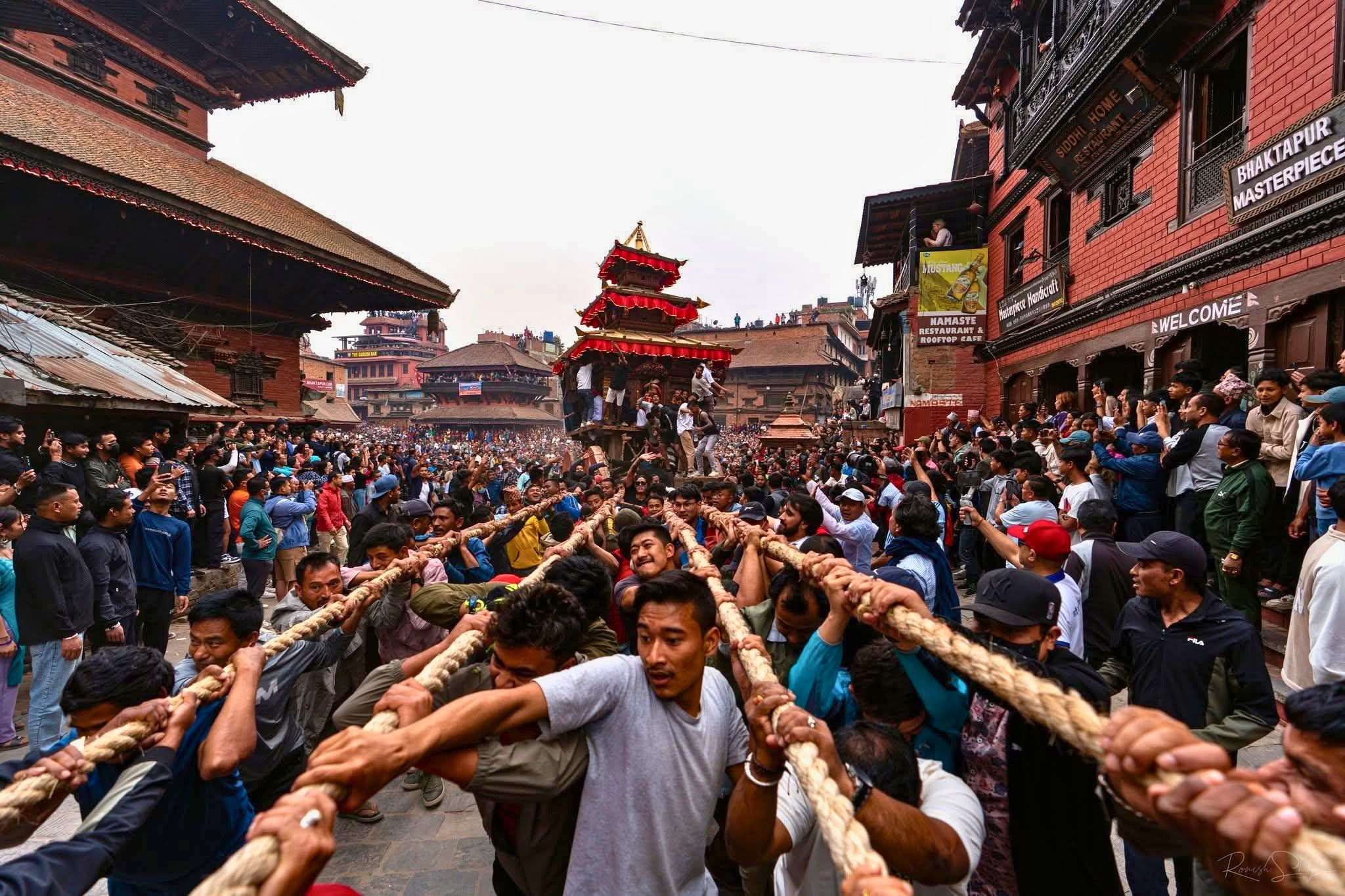
| 1:00 to 4:00 pm | Lunch and Bhaktapur Durbar Square | NPR 1,800. In Your Pocket describes the historic core as largely car-free |
| 4:00 to 5:30 pm | Return to Kathmandu | Sources give 45 minutes to 1.5 hours in traffic |
All fees are for foreign visitors, as listed by the Nepal Tourism Board in November 2026. The total across both days is NPR 5,700. See Kathmandu entry fees for other nationalities and the disputed figures.
How long does the Bhaktapur drive really take?
Expect 45 minutes to 1.5 hours each way, though sources differ. It’s the one leg in this plan that can throw off your day.
| Source | Distance | Time |
|---|---|---|
| kimkim | About 15 km | About 30 minutes to 1 hour or more by taxi, depending on traffic |
| Wayro | About 16 km | About 45 minutes clear, up to 1.5 hours at peak |
| kimkim, local bus | Not given | About 1 hour |
In Your Pocket reports a taxi from Thamel at about NPR 700 to 1,000 each way. Kathmandu.im suggests a taxi from Bhaktapur to Changu village at NPR 300 to 400. Treat these as rough figures, and agree the price before you get in.

What else should you plan for at each site?
These short notes cover what changes your timing or what you wear. Read the full Patan Durbar Square and Bhaktapur Durbar Square pages if you want the history.
- Patan: the museum sits on the square and is included in your ticket. Its hours are reported differently, so check before you plan around it.
- Pashupatinath: the temple trust’s dress rules are strict, and cremations take place on the ghats. Stay well back from mourners, and don’t photograph them.
- Boudhanath: walk clockwise with everyone else, and don’t rush it.
- Changu Narayan: Kathmandu.im describes a 30-minute uphill walk from the base of the ridge, or you can take a taxi to the ridge end. Wear shoes with grip.
- Bhaktapur: give it the most time. In Your Pocket says “Bhaktapur punishes haste” and suggests a full day if you can spare one.
What is the alternative for rainy days?
Swap so the wettest day has the museums and the driest has the east of the valley. From June to September, showers are likely, and the uphill walk at Changu Narayan is harder when wet.
- Wet day one: skip the Swayambhunath stairs and use the road. Spend longer inside the Patan Museum, where Nepal Traveller also mentions a courtyard café.
- Wet day two: drop Changu Narayan, and go straight from Boudhanath to Bhaktapur. Add the Taragaon Museum near Boudhanath, and phone first, because we couldn’t confirm its hours.
- Very wet: make one of the days a museum day. Patan Museum and Narayanhiti Palace Museum work well together, and both are under a roof. Their published hours conflict, as the one day in Kathmandu page explains.
Check conditions on the morning. Changu Narayan is the stop to give up first.

Is there an easier version of this plan?
Yes. Drop one site from each day and spend the extra time where you like it most. Most people would keep Bhaktapur, Patan, Boudhanath and Pashupatinath, then visit Swayambhunath if they have energy left.
You could also split the second day differently. Go to Bhaktapur and Changu Narayan in the morning, then come back to Boudhanath and Pashupatinath for dusk and aarti (the evening lamp ceremony). That gives you a nicer evening, but your drive back from the east runs closer to rush hour. Published aarti times conflict, so ask on the day.
Should you do this with a tour or on your own?
You can do all of this on your own by taxi, and it’s cheaper if you’re confident about agreeing fares and reading a map. Our self-guided walking tour guide will help you once you’re in the squares.
A car and guide make day two much easier, because it has four stops and the longest drives. Our 7 UNESCO Sites in 2 Days package covers the same stops over two 6 to 7-hour days. It’s the version we’d choose if you have the time.

What if you have more or less time?
Drop to the eastern day alone if you’re short of time, or add a third day if you can. The Bhaktapur Day Tour with Changu Narayan covers the east in 6 to 7 hours. If you find a third day, go on to 3 days in Kathmandu, which adds Nagarkot and the villages south of Patan.